Know Your Ingredients
Fragrance-Free vs Unscented
They sound like the same promise — but one means “no fragrance added,” and the other can quietly include a masking fragrance to hide a smell.…

Every ingredient we use, explained in plain language: what it is, where it comes from, and what it actually does on skin. If you have ever turned a bottle over and given up halfway through the label, start here. No jargon, no scare tactics, and honest about what an ingredient cannot do.
They sound like the same promise — but one means “no fragrance added,” and the other can quietly include a masking fragrance to hide a smell.…
A thick, glossy oil pressed from the castor bean — about 90% one unusual fatty acid, which is the secret behind its slip and shine. Here’s…
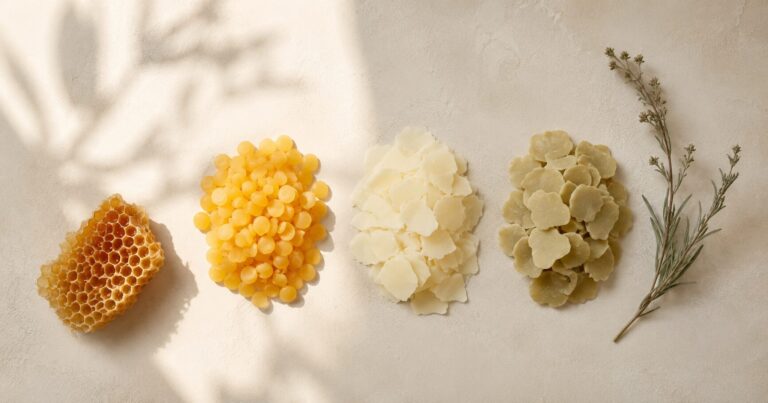
The three waxes behind most balms: one from bees, two from plants — differing in hardness, feel, and vegan status. Here's how they really compare, and…
Anhydrous just means water-free — balms, oils, and butters with no water in them. That one difference changes preservatives, concentration, shelf life…
They score how likely an oil is to clog pores, from 0 to 5 — a genuinely useful starting point, but a rough guide, not a…
Labels list by amount, hide behind formal names, and bury the good and the questionable in plain sight. Here's a simple 6-step way to decode any…
Zinc oxide is a gentle mineral that forms a skin barrier: why it's in diaper creams and mineral sunscreens, and what to ask your pediatrician.
Vitamin E (tocopherol) is an antioxidant that keeps oils fresh, not a preservative that stops microbes. Here's what it really does on a skincare label.
Beeswax gives balms their structure and helps seal in moisture. Here's what it is, what it does, how to spot it on a label (Cera Alba),…
Everything we write about, in products you can actually use. Four or five ingredients each, unscented, made by our family in Colorado.
Shop all products →New ingredient breakdowns and simple-living guides, straight to your inbox. Plus 10% off your first order.
Sign me up →