Spend $50, Get 10% Off

The three waxes behind most balms: one from bees, two from plants — differing in hardness, feel, and vegan status. Here's how they really compare, and when to reach for each.

Beeswax is an animal wax from honeybees; candelilla and carnauba are plant waxes (from a shrub and a palm). They differ mainly in hardness: carnauba is the hardest, candelilla is firmer than beeswax, and beeswax is the softest and most emollient. Beeswax isn’t vegan, so candelilla and carnauba are the common plant-based alternatives. All three make good balms — beeswax for its soft, breathable feel; candelilla for a firm vegan option; carnauba (in small amounts) for extra firmness and shine.
Nearly every balm, lip balm, and salve you’ve used owes its structure to a wax — and three waxes dominate: beeswax, candelilla, and carnauba. They’re the ingredient that turns liquid oils into a solid, spreadable balm instead of a runny puddle — the quiet structural backbone of the whole product.
The headline difference is simple: beeswax comes from bees (animal); candelilla and carnauba come from plants. Beyond source, they differ in hardness — carnauba is the hardest, candelilla is firmer than beeswax, and beeswax is the softest and most emollient — and in vegan status, since only and only the two plant waxes are vegan.
This guide introduces each wax, compares them on the things that matter (hardness, feel, vegan status), and explains which to reach for and why, whether you’re shopping for a balm or making your own at home. For a deeper look at beeswax specifically, see what is beeswax in skincare? If you’ve ever wondered why one lip balm feels soft and cushiony while another feels firm and glassy, the wax is usually the reason — so knowing these three names quietly explains a lot about how balms behave.
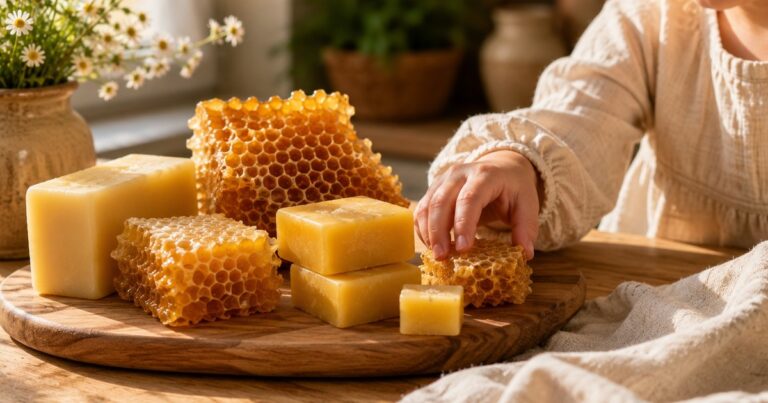
Beeswax is the classic. Made by honeybees to build the honeycomb of their hives, it’s been used in skincare, candles, and balms for thousands of years — and it’s the wax we use at Bear Basics.
Its appeal is its feel: beeswax is relatively soft and emollient, forms a breathable protective layer, and has a pliable quality many people love in a balm or lip balm. It’s the softest of the three waxes here, which gives balms a smooth, cushiony character that glides on easily rather than dragging across the skin. The honest catch: beeswax is an animal product, so it isn’t vegan, and products with it can’t be labeled vegan (or, typically, cruelty-free). For many, its feel and heritage are worth that trade-off; for vegans, it’s a reason to choose a plant wax instead. Beeswax also carries a faint natural warmth of scent and a golden color in its unrefined form, which some people love as a sign of a minimally-processed ingredient and others prefer to avoid — another small reason the plant waxes, which are more neutral, appeal to some formulators.
Candelilla wax comes from the candelilla shrub, native to Mexico and the southwestern United States, where it’s long been harvested. It’s the go-to vegan alternative to beeswax in balms.
Candelilla is harder than beeswax, so a little of it goes further — you typically use less of it to achieve the same firmness (often around half the amount of beeswax). It makes excellent vegan balms and lip balms, giving good structure and a firm, smooth, and dependable finish. The feel is slightly different from beeswax — a touch firmer and less “cushiony” — but many people find it lovely, and it’s the natural choice when you want a plant-based, vegan product without giving up a good balm texture. It’s become the default vegan wax for exactly this reason: it’s firm, reliable, and widely available, so a brand wanting a plant-based balm can reach for candelilla and get a dependable result without much fuss.
Carnauba wax comes from the leaves of the carnauba palm in Brazil — and it’s the heavyweight of natural waxes: one of the hardest, with a high melt point and natural shine.
Because it’s so hard, carnauba is usually used in small amounts rather than as the main wax — a little added to a balm boosts firmness, gloss, and melt resistance (useful for products that need to hold shape in warmth). It’s also vegan. You’ll rarely see a balm made mostly of carnauba; instead it almost always plays a supporting role, often alongside another wax, to firm things up and add a subtle shine. If you’ve used a balm that held its shape beautifully on a hot day, there’s a fair chance a little carnauba was doing that job quietly in the background — it’s the reason some balms resist going soft and greasy in summer heat. Think of it as the “firming booster” of the wax world.
If you remember one technical thing, make it this — hardness is the axis these three waxes differ on most:
Beeswax (softest, most pliable) → Candelilla (firmer) → Carnauba (hardest, highest melt point). This is why you use progressively less as you go harder: candelilla needs less than beeswax for the same firmness, and carnauba needs less still.
Hardness drives everything practical: how firm the balm is, how it holds up in heat, how glossy it looks, and how much of it you actually need. A harder wax makes a firmer, more heat-resistant balm and is used more sparingly. This is the single most useful thing to carry with you: once you know a wax’s hardness, you can predict how a balm made with it will feel and behave before you ever open the tin. This is also why formulators sometimes blend waxes — combining, say, a softer emollient wax with a touch of carnauba to get both a nice feel and good firmness. Blending is where a lot of the craft in balm-making lives: the goal isn’t usually to crown one wax the winner, but to combine their strengths so the finished balm feels and behaves exactly the way it should.
This is the difference that matters most to many shoppers, so let’s be clear and honest about it:
| Wax | Source | Vegan? |
|---|---|---|
| Beeswax | Animal (honeybees) | No |
| Candelilla | Plant (shrub) | Yes |
| Carnauba | Plant (palm) | Yes |
Beeswax is an animal product, so any balm containing it is not vegan (and generally not labeled cruelty-free). Candelilla and carnauba are plant-derived, making them the standard, reliable choices for vegan balms. If a vegan or plant-based label is important to you, that’s the single clearest reason to choose candelilla or carnauba over beeswax — it’s a straightforward, honest distinction. It’s also worth knowing that “beeswax-free” and “vegan” on a label usually point you toward candelilla or carnauba as the structuring wax, so once you understand these three names, you can often tell how a balm was built just from its claims.
Beyond hardness and source, the three waxes give balms slightly different characters:
None of these is better in the abstract — they’re different tools for different jobs. A formulator (or you, if you make your own) picks the wax, or blend of waxes, that gives the feel and firmness a particular product needs. That’s why you’ll often see more than one wax on an ingredient list — it’s not padding, it’s the formulator dialing in the exact texture they want, the way a cook balances a few ingredients to get a dish just right.
Everything side by side:
| Beeswax | Candelilla | Carnauba | |
|---|---|---|---|
| Source | Bees (animal) | Shrub (plant) | Palm (plant) |
| Hardness | Softest | Firmer | Hardest |
| Melt point | Lower | Higher | Highest |
| Vegan? | No | Yes | Yes |
| Feel | Soft, emollient | Firm, smooth | Hard, glossy |
| Typical use | Main wax | Main vegan wax | Small-amount booster |
A practical guide to choosing:
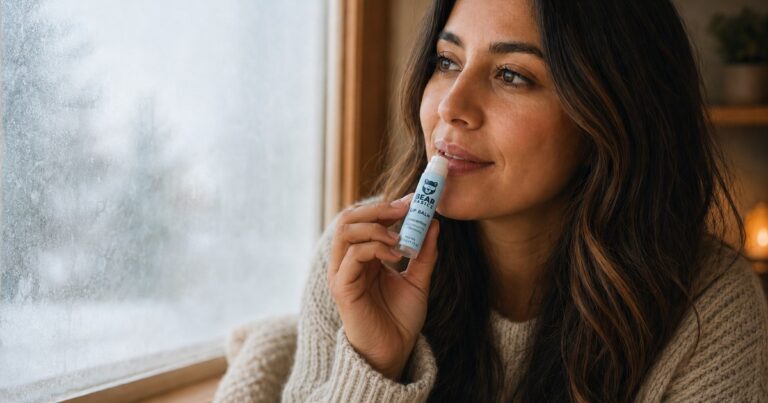
For lip balm specifically, all three appear often — beeswax for the traditional feel, candelilla for vegan versions, carnauba to firm and add shine. See how wax choice shapes a balm in how to fix chapped lips for good and lotion bar vs regular lotion.
If you make your own balms, swapping waxes isn’t one-to-one — because they differ in hardness:
Since candelilla and carnauba are harder than beeswax, you use less of them. A common starting point: candelilla at roughly half the amount of beeswax, and carnauba even less. Always test a small batch — too much hard wax makes a balm stiff and draggy, tough to apply and unpleasant on the skin — the opposite of what you want.
This is easily the most common DIY balm-making pitfall: swapping candelilla for beeswax gram-for-gram and ending up with a rock-hard balm. Start with less, test the firmness, and adjust upward only if you need to. It’s far easier to add a little more wax to a too-soft batch than to rescue a batch that’s already set up hard as a candle. The same logic applies to carnauba, only more so — a little goes a very long way.
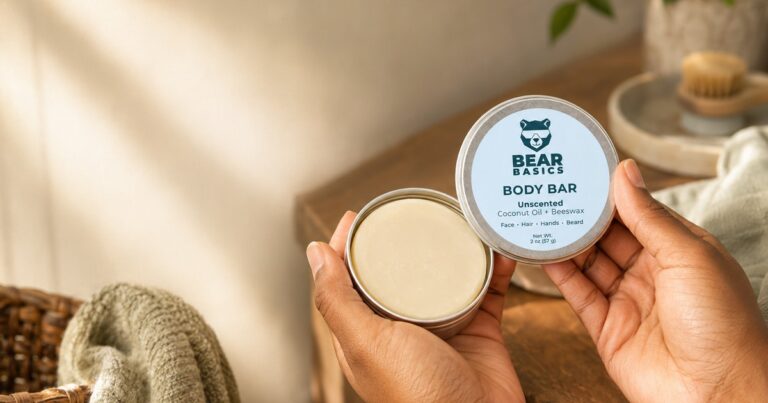
At Bear Basics, we use beeswax — and in the spirit of honesty, that deserves a plain, honest explanation, including the trade-off it involves.
We choose beeswax for its feel: it’s soft, emollient, and breathable, with a cushiony quality we love in a balm and a long, trusted history in skincare. It fits the simple, time-tested, recognizable ingredients we deliberately build around. The honest trade-off is real, and we won’t hide it: because beeswax is an animal product, our balms are not vegan and not cruelty-free. We’ve made that choice deliberately, valuing beeswax’s qualities — but we completely understand that for vegan customers, candelilla or carnauba products are the right call, and we’d rather tell you straight than blur it. Honesty about what’s in our products, and what that means, matters more to us than a marketing-friendly label. We’d rather a vegan customer read our list, understand it contains beeswax, and choose a plant-based brand than feel misled — that kind of clarity is the whole point of the way we talk about our ingredients.
Three quick clarifications:
The balanced takeaway is simple: three good natural waxes, each with its own role — pick by feel, firmness, and whether you need a vegan option. There’s no villain among the three, and no single “right” wax — just three good natural options that shine in different situations.
Beeswax, candelilla, and carnauba are the three waxes behind most balms. Beeswax (animal) is the softest and most emollient; candelilla (plant) is firmer and the go-to vegan alternative; carnauba (plant) is the hardest, used in small amounts for firmness and shine. They differ mainly in hardness and vegan status — and since harder waxes are used more sparingly, they’re not swapped gram-for-gram.
Choose beeswax for a soft, classic feel; candelilla for a firm vegan balm; carnauba to boost firmness or shine. We use beeswax for its feel — and we’ll always be upfront that this makes our balms non-vegan. Explore our beeswax-based lip care and balms to feel the difference a good wax makes. And whichever wax a balm uses, the same principle applies: a short, honest ingredient list, with each wax and oil there for a clear reason, is the mark of a product worth trusting.
Megan co-founded Bear Basics and leads design. As a mom, she writes our gentlest, most practical guides — on ingredients, sourcing, and simple family skincare — with an emphasis on honest, well-sourced, and simple. Read the full story →