Quick answer
A balm is fats and wax with no water; a cream is oil and water held together by emulsifiers. Everything else follows from that. Because a cream contains water it needs a preservative system and emulsification, so its ingredient list is necessarily longer — and that length is doing structural and safety work rather than being filler. Because a balm has no water, it’s more concentrated, keeps longer, travels better, and seals more effectively; it also feels heavier and spreads less easily over large areas. The common belief that creams “absorb better” is mostly the water evaporating, not more product reaching your skin. In practice: balms for the demanding spots — hands, shins, elbows, lips, winter — creams for everyday coverage and lighter comfort, and layering both is a perfectly sensible answer.
Answers at a glance6 quick questions
The difference?
Water — that’s it.
Very dry skin?
Balm usually wins.
Creams absorb better?
No — the water evaporates.
Why preservatives?
Microbes need water.
Travel?
Balm, comfortably.
Use both?
Yes — cream first, balm on top.
01 The short answer
“Balm or cream?” sounds like a preference question and is actually a formulation one. The two formats are built differently, behave differently, and are honest about different things — and once you know what separates them, choosing gets straightforward.
The separating factor is water. A balm has none; a cream is largely built around it. That single fact determines the ingredient count, whether preservatives are necessary, how it feels going on, how long it keeps, how it travels, and how well it holds moisture in. Everything people argue about downstream traces back to it.
We should also be upfront: we’ve only ever made balms. That gives us a bias, and it also gives us a reason to be careful here — because the honest version of this comparison doesn’t have balms winning every category, and section 12 is where we say what’s changing about our own line.
02 The only real difference
The structural difference, plainly:
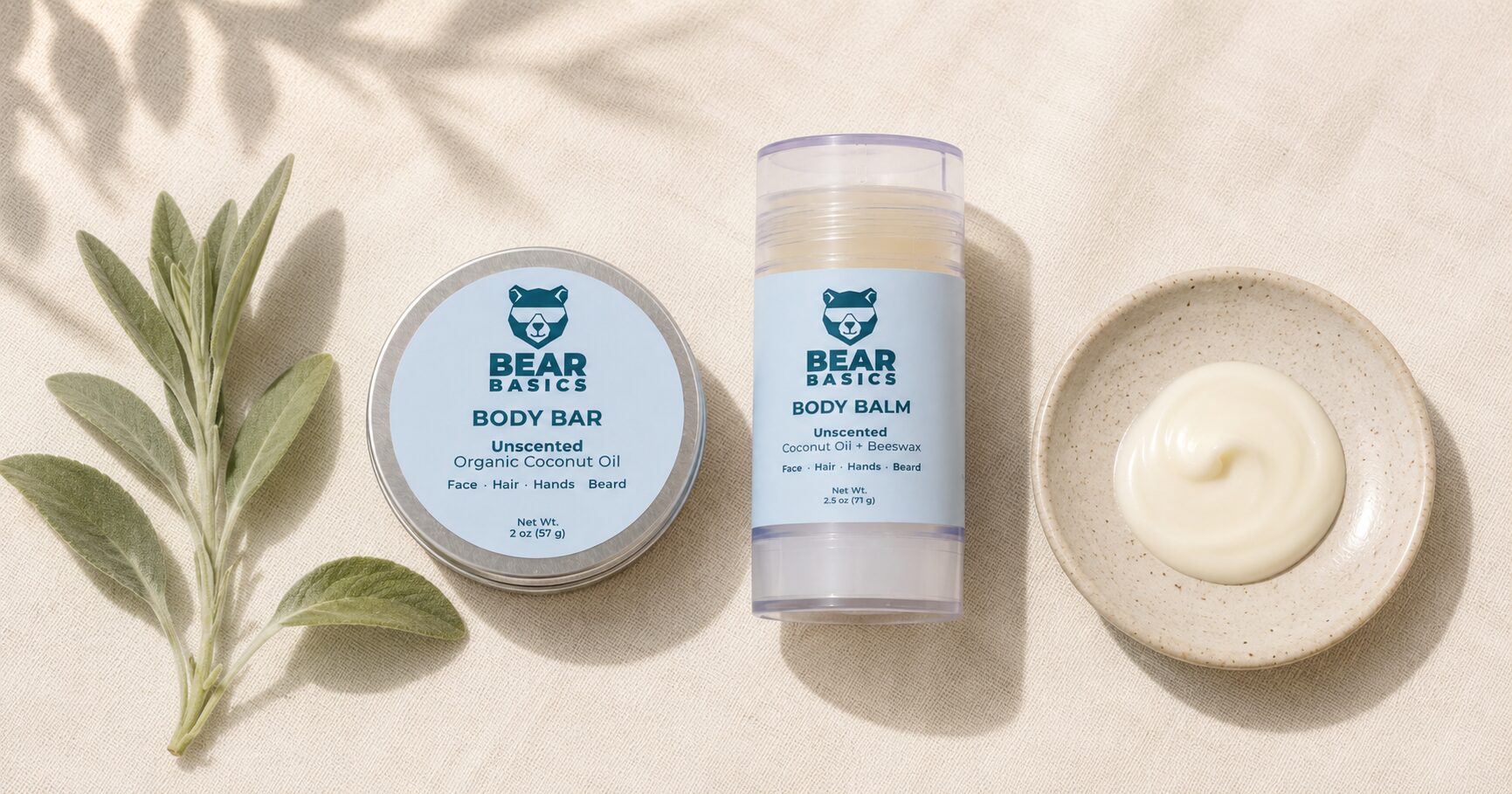
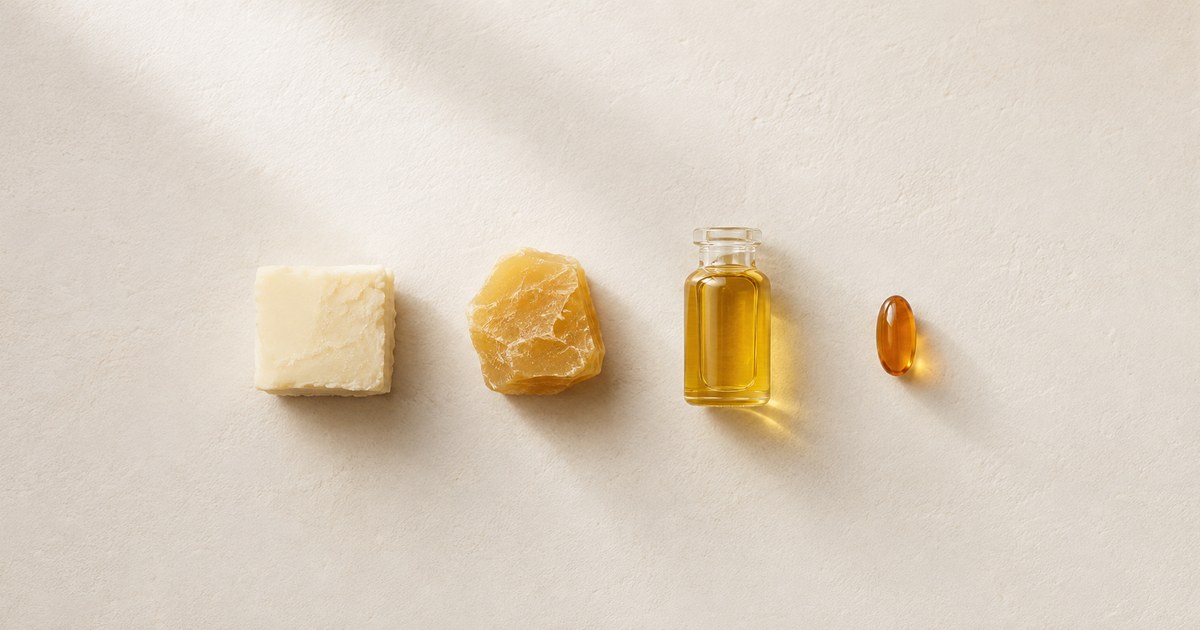
- A balm is fats and wax. Ours is a base fat, beeswax, castor oil, and vitamin E — all oil-soluble, all compatible, melted together and poured. There’s nothing in it that isn’t fat-like.
- A cream is oil and water, forced to coexist. Oil and water don’t mix, so a cream needs emulsifiers to hold them in a stable arrangement — that’s the whole technical achievement of a cream, and it’s not trivial.
- Lotions are creams with more water, broadly — thinner, lighter, same architecture. The balm-to-lotion range is essentially a scale of how much water is present.
- Which makes the categories cleaner than the marketing suggests. “Body butter,” “salve,” “ointment,” “moisturizer” — the useful question about any of them is whether water is in the formula, and the ingredient list answers it in two seconds.
The two-second label check
Look at the first ingredient. If it’s water (or “aqua”), you’re holding an emulsion — a cream or lotion — and there will be emulsifiers and a preservative system further down. If the list opens with an oil, butter, or wax and water never appears, it’s a balm. That one check tells you more about how a product will behave than the entire front of the package.
03 What water requires
Water is not a passive ingredient. It brings requirements:
- Emulsifiers, to hold it together. Usually several, working across temperature changes and months on a shelf. Without them a cream separates.
- A preservative system, to keep it safe. Microbes need water to grow, so any water-containing product needs tested preservation. This is genuine safety work — and worth saying clearly: a “preservative-free” cream is a warning sign, not a virtue.
- Stabilizers and texture agents, in many formulas — thickeners, pH adjusters, and the rest of the supporting cast that keeps an emulsion behaving.
- Which is why cream ingredient lists are longer, necessarily. Not because formulators enjoy complexity, but because water imposes a support structure. We laid this out in the short-list post, and it’s the fairest thing to say about long lists: much of that length is load-bearing.
- The reasonable test isn’t list length. It’s whether each ingredient has a job someone can name in a sentence. A thirty-line cream where every line is doing something is a better product than a five-line one padded for appearances.
04 Why balms have short lists
Run the same logic backwards and the balm’s short list stops looking like restraint:
- No water means no entourage. Nothing to emulsify, nothing for microbes to live in, nothing to stabilize. The support crew has no work, so it isn’t there.
- It’s structural, not virtuous. Our four-ingredient list isn’t discipline — it’s a consequence of choosing a format where four ingredients suffice. We’d rather say that than take credit for chemistry.
- Which also sets the limits. A water-free format can’t deliver a light, fast-vanishing feel, and it can’t carry water-soluble ingredients — glycerin and colloidal oatmeal both want a water phase to work in. Those are real capabilities we don’t have.
- And a note on preservatives: our products skip them because there’s nothing to preserve against, not because preservatives are bad. The vitamin E in our formulas is an antioxidant protecting the fats from oxygen — a different job entirely, and one worth not conflating.
05 What a balm is good at
Where the balm format genuinely wins:
- Sealing. A concentrated layer of fats and wax slows water leaving skin more effectively than a lighter emulsion — the occlusive job, which is what compromised or very dry skin needs most.
- Concentration. Nothing in the jar is water, so a small amount goes a long way — which matters for cost per use and for how long a container lasts.
- Longevity. No water means no microbial clock; the only aging is slow oxidation, so opened life tends to run longer. Check the period-after-opening mark on any product.
- Travel and durability. Can’t spill, no liquid restrictions, tolerates temperature swings, and recovers if it melts. A cream that separates in a hot car is often just finished.
- Short, checkable formulas. Fewer ingredients means fewer variables if skin reacts — the debuggability argument, which matters most for reactive skin.
- Targeted use. Knuckles, lips, cracked heels, a chafe-prone spot — small demanding areas are exactly what a concentrated product suits.
06 What a cream is good at
And where creams genuinely win — stated properly, because a comparison where our format sweeps every category would be worth ignoring:
- Coverage. A cream spreads over large areas quickly and evenly. Doing a whole body with a balm is slower and takes more effort, and anyone who has tried it after a shower with a toddler waiting knows it.
- Feel. Lighter, less present, quicker to feel finished — which for a lot of people is the difference between using a moisturizer daily and abandoning it. The best formula is the one you’ll actually apply.
- Under clothes and during the day. A cream is easier to dress over and less likely to transfer, which makes it more practical for a morning routine than a heavy balm.
- It supplies water as well as oil. A balm seals in water already on your skin, which is why the damp-skin technique matters so much. A cream brings its own water phase — so it’s more forgiving if you apply it to skin that’s already dry.
- It can carry water-soluble ingredients. Humectants and other water-loving components need a water phase, so creams can do things balms structurally cannot.
- Faces and large sensitive areas often suit a lighter format better, particularly for people who find balms too occlusive for facial skin.
07 The absorption misunderstanding
The most persistent belief in this comparison, and it’s worth dismantling carefully: “creams absorb; balms just sit on top.”
- What you’re actually feeling is evaporation. A cream is largely water, and within minutes that water evaporates — leaving a much thinner oil layer behind. The sensation of disappearing is the water leaving, not the product being absorbed.
- A balm has nothing to evaporate. What you applied is what remains, so it feels present for longer. That’s a difference in what’s left on your skin, not evidence that less got in.
- Sitting on top is partly the job. The occlusive function is performed at the surface — slowing water escaping is something a layer does by being there. A product that vanishes completely has stopped doing that part of the work.
- Which reframes the preference honestly. If you dislike the feeling of a balm, that’s a legitimate reason to prefer a cream — just not because the cream is delivering more. Aesthetic preference is a real reason; it’s the pseudo-technical justification that’s wrong.
- And it explains a common experience: people who feel a lotion “stops working” by mid-morning in winter are often noticing that the thin oil layer left behind isn’t enough for the conditions — which is a sensible moment to go richer on the worst areas.
08 By body part
The practical mapping most people arrive at eventually:
- Hands — balm, especially knuckles, especially in winter. Frequent washing strips constantly, and a concentrated product holds up better between washes (the full system).
- Lips — balm, not really a contest. Thin skin, no oil glands of its own, fully exposed.
- Shins, elbows, knees, heels — balm. Thin skin over bone, dries first, and these are small enough areas that spreadability doesn’t matter.
- Whole body after a shower — cream is often more practical, particularly daily and particularly if you’re dressing straight after. A balm works beautifully here too; it just takes longer.
- Face — personal, and split. Some people do well with a light balm layer; plenty find it too heavy and prefer a cream. Neither is wrong.
- Babies and children — either, applied thinly to the areas that need it. Practically, a balm on cheeks and a lighter product over larger areas is a common household pattern.
Want the free family bundle?Two Color & Grow coloring books, our Fam Jams family music, and a plain-English skincare guide — free. Grab the bundle — instant download. 09 By season
The seasonal split, which is where a lot of households naturally use both:
- Summer favors lighter. Humid air means less water pulled from skin, and heavy layers feel unpleasant in heat. A cream often suits, with balm reserved for lips and specific spots.
- Winter favors richer. Cold outdoor air and heated indoor air both dry skin continuously, so the sealing job matters more — the whole argument in the fall transition guide, which is why that post publishes in September rather than December.
- The sensible pattern isn’t replacing everything. Most people go richer only where skin complains — hands, shins, lips — and keep their usual product elsewhere. That’s cheaper and easier to sustain than a seasonal overhaul.
- And nights change the calculation. A heavier layer is more tolerable at bedtime than under a work shirt, which is why the evening application is where a balm fits most easily regardless of season.
10 Shelf life, travel, and value
Three practical dimensions worth weighing:
- Shelf life. Balms typically carry longer opened windows, since there’s no microbial clock. Creams depend on their preservative systems and should be respected within their stated period — the PAO symbol tells you which is which.
- Travel. Solid formats win clearly — no spills, no liquid limits, better temperature tolerance, and recoverable after a melt. This is why the gym bag kit is entirely solids.
- Cost per use. A balm looks more expensive per ounce and often isn’t per application, because you use less and none of what you bought is water. Worth comparing on how long a container actually lasts rather than on shelf price.
- Hygiene. Both are fine with clean dry hands. Water-based products are more sensitive to contamination getting into the jar, which is a point in favor of pumps and tubes for creams.
11 Using both together
The answer plenty of people land on: both, in sequence.
- The rule is lighter first, heavier last. Cream on damp skin over larger areas, then balm on the spots that need extra sealing — knuckles, shins, lips. A balm applied first blocks what comes after it.
- Why it works: the cream supplies water and lighter conditioning; the balm slows that water escaping. Two different jobs, done in the order that lets both happen.
- It’s most useful in winter and overnight — the layered approach on hands before bed is close to slugging, and it’s the fastest way to turn around a rough week.
- Don’t overdo it. Thin layers of each; the goal is coverage, not thickness. Piling product on doesn’t accelerate anything and mostly transfers to your clothes.
- And introduce one at a time. Two new products in one week means no information if something reacts — the standing rule everywhere on this blog.
12 Why we’ve only made balms
Our own position, stated honestly: we’ve only ever made balms, for reasons that were as much about capability as philosophy — and we’ve been working on a cream.
- Why balms first. A water-free product is genuinely simpler to make well: no emulsification to stabilize, no preservative system to test, no microbial risk to manage. For a small operation starting out, that’s the responsible place to begin, and we’d rather admit that than dress it up as pure principle.
- Why a cream at all. Because sections 6 and 8 are true. A balm can’t give a light everyday feel, can’t cover a whole body quickly, and can’t carry water-soluble ingredients. Those are real gaps in what we can offer, not imaginary ones.
- What it would mean, plainly: a longer ingredient list, with emulsifiers and a proper preservative system. We’ve said this in the oat post, the magnesium post, and the glycerin post, and we’ll keep saying it: a cream from us will not be a four-ingredient product, and anyone expecting one should hear that now rather than feel misled later.
- The standard doesn’t change. Every ingredient still has to have a job we can name in a sentence. Preservatives have one. Emulsifiers have one. Ingredients that only look good on a label still don’t.
- Nothing is finished, and we don’t pre-sell. When there’s something real it will arrive with its full list and its reasoning — and if it isn’t good enough, it won’t arrive at all.
13 The bottom line
Balm versus cream, settled: the difference is water, and water brings emulsifiers, preservatives, and a longer list — all of it doing necessary work. Balms are the concentrated end: better at sealing, longer-lasting, spill-proof, short-listed, and ideal for hands, lips, shins, winter, and travel. Creams are the practical end: lighter, faster over large areas, easier to dress over, and able to carry water-soluble ingredients a balm cannot.
Ignore the absorption story — that’s water evaporating, not product vanishing into you — and choose by the job. For most households the honest answer is both: a cream where coverage matters, a balm where the sealing does, and the heavier one applied last.
"A cream feels like it disappears because its water evaporates. That’s a difference in sensation, not in how much reached your skin."— The honest verdict
The 6 things to remember
- The only structural difference is water — everything else follows from it.
- Water requires emulsifiers and preservatives; a “preservative-free” cream is a red flag.
- Balms win on sealing, concentration, shelf life, travel, and short ingredient lists.
- Creams win on coverage, lighter feel, dressing over, and carrying water-soluble ingredients.
- “Creams absorb better” is the water evaporating — a preference, not a performance difference.
- Using both is sensible: lighter first on damp skin, heavier on the demanding spots.
Frequently asked
What's the difference between a balm and a cream?
Water. A balm is fats and wax with no water in it; a cream is oil and water held together with emulsifiers. That single difference drives everything else — a cream needs a preservative system and emulsifiers, so it has a longer ingredient list, while a balm is more concentrated, needs no preservatives, and keeps longer. Neither is better in general; they suit different jobs.
Which is better for very dry skin?
For genuinely dry, rough, or exposed areas — hands in winter, shins, elbows, cracked heels — a balm usually wins, because it’s more concentrated and better at slowing water escaping. Creams are often more comfortable for large areas, everyday use, and skin that doesn’t want something heavy. Many people end up using both, in different places.
Do creams absorb better than balms?
This is mostly a misunderstanding of what you’re feeling. A cream feels like it disappears because its water evaporates within minutes, leaving a thinner oil layer behind. A balm has no water to evaporate, so what you applied stays where you put it and feels present for longer. That’s a difference in sensation, not a difference in how much reaches your skin.
Why do creams need preservatives and balms don't?
Because microbes need water to grow. A water-containing product is a hospitable environment for bacteria and mold, so it needs a properly tested preservative system — that’s legitimate, necessary safety work rather than filler. A water-free balm gives microbes nothing to live in, so it doesn’t need one. A cream without preservatives is a red flag, not a selling point.
Which lasts longer once opened?
Balms, generally. With no water, the only aging process is slow oxidation of the fats, so a well-stored balm often has a longer opened life — check the period-after-opening symbol on the label. Creams depend on their preservative systems and typically carry shorter windows, so they’re worth using within the stated period.
Which is better for travel?
Balms and solid bars, by a wide margin. They can’t spill, don’t count against liquid rules, tolerate temperature swings better, and recover if they melt. Creams travel fine in a proper container but bring spill risk, liquid restrictions, and less tolerance for a hot car.
Can you use a balm and a cream together?
Yes, and it’s a sensible approach: cream first on damp skin over larger areas, then a balm on top of the spots that need more sealing — knuckles, shins, lips. The cream supplies water and lighter conditioning, the balm slows it escaping. Applying the heavier product last is the general rule.
Is a longer ingredient list in a cream a bad sign?
Not by itself. A water-containing formula genuinely requires emulsifiers and preservation to work and stay safe, so some of that length is doing necessary structural and safety work. The question is whether each ingredient has a job you can name — not whether the list is short. Judge the list by function, not by length.
Megan Smith
Co-Founder, Bear Basics
Megan co-founded Bear Basics and leads design. As a mom, she writes our gentlest, most practical guides — on ingredients, sourcing, and simple family skincare — with an emphasis on honest, well-sourced, and simple. Read the full story →