Spend $50, Get 10% Off

It’s simple: warm a little, apply to slightly damp skin, thin on the face and generous on dry body spots. A little goes a long way — here's the full, honest how-to.

To use a tallow balm: scoop a small amount, warm it between clean fingers until it melts, and press it into slightly damp skin — a thin layer on your face, a more generous amount on dry body areas like heels and elbows. A little goes a long way, so start small and add more only if needed. Applying to damp skin helps tallow seal moisture in, since it’s occlusive. For the face, many prefer a thin layer at night; if you’re acne-prone, patch-test first.
Tallow balm is one of the simplest products to use — there’s no complicated technique or ritual to memorize — but a few small habits make it work much better. Here’s the whole thing in brief.
Warm a small amount between clean fingers until it melts, then press it into slightly damp skin — thin on the face, more generously on dry body spots. That’s genuinely it. The two things people most often get wrong are simply using too much and applying it to bone-dry skin; get those two right and a tallow balm rewards you with soft, sealed, genuinely comfortable skin.
This guide walks through exactly how much to use, how to apply it, where it shines on the face and body, when and how often, and the small mistakes to avoid. For what a good tallow balm actually does, see beef tallow skincare benefits. The nice thing about tallow balm is how forgiving it is once you know these basics — there’s very little you can truly get wrong, and the two habits worth building take seconds to learn and then become second nature.
Two simple ideas explain almost everything about using tallow balm well: use a little, and apply to damp skin.
Tallow balm is concentrated, so a small amount covers a lot — over-applying is the main cause of a greasy feel. And because tallow is occlusive (it seals moisture in rather than adding water), it works best over slightly damp skin, where there’s moisture for it to trap.
Keep those two ideas in mind and the rest is easy. Everything below — face, body, timing — is really just applying those two principles to different situations. Get the amount and the damp-skin timing right, and tallow balm feels wonderful; get them wrong, and it can feel like too much. That’s reassuring, really: if a tallow balm ever feels heavy or greasy, it’s almost never the balm’s fault — it’s usually just a signal to use a little less, on slightly damper skin, next time.
Less than you think. This is the single most common adjustment people make once they get used to tallow balm.
Because tallow balm is so concentrated, a small jar lasts a long time. Reaching for less not only makes a small jar last for months — it’s the key to that soft, absorbed finish rather than a greasy one. When in doubt, use less and reapply if needed. It’s far easier to add a touch more to a spot that still feels dry than to deal with the slick, over-applied feeling of too much all at once — so err on the side of too little, especially while you’re getting a feel for it.
Tallow balm is solid (or soft-solid) at room temperature, so the trick is warming it so it melts and spreads thinly:
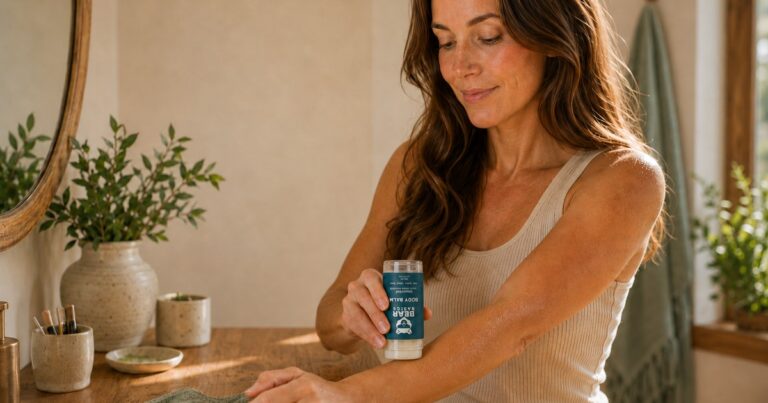
Scoop a small amount with a clean fingertip, then warm it between your fingers for a few seconds until it turns glossy and melts. This lets it spread thin and sink in rather than sitting on top of the skin in a waxy film. Then press it — don’t rub or drag hard — into slightly damp skin, working outward in a thin, even layer over the area. Warming is the difference between a balm that melts in beautifully and one that drags; it takes two seconds and makes all the difference between a balm that feels luxurious and one that feels like it’s just sitting on your skin. Body heat from your fingertips is all it needs — no need to melt it in a bowl or do anything fancy. If you’re using whipped tallow, it’s already soft and needs even less warming.
Many people love tallow balm as a facial moisturizer. The keys are thin and, for most, at night.
Tallow is widely considered low-comedogenic, which is why it suits many people’s faces — but skin is individual, so it’s worth patch-testing if you’re at all prone to breakouts. See is beef tallow good for your skin? for more, and patch-test if you’re prone to breakouts. At night, a thin layer has hours to soften and seal while you sleep.
On the body, you can be more generous — especially on dry areas — and the best moment is right after bathing.
Apply tallow balm to slightly damp skin within a few minutes of a shower or bath, when skin is soft and there’s moisture to seal in. Focus on the areas that dry out most — lower legs, forearms, shoulders, anywhere that feels tight — and be more generous with the amount than you would ever be on your face. Warm the balm, press it in, and give it a moment to absorb. Because it’s occlusive, a body application in the few minutes after bathing locks in that just-washed moisture and keeps skin soft for hours. This is why so many people who switch to tallow balm say their skin finally stays comfortable through the day — it’s not that tallow is magic, it’s that sealing damp skin holds onto moisture far better than applying anything to skin that’s already dried out. For very dry or rough spots, see the targeted tips next.
Tallow balm really shines on the spots that dry out and take the most abuse:
These high-need, high-friction areas are where a rich, occlusive balm really outperforms a thin, watery lotion. Keeping a jar handy — by the sink, on the nightstand, in a bag — makes it easy to reach for them the moment they need it. A little tallow balm, warmed and pressed in, is often all a dry spot needs — and because these areas are small, even a big, dry heel takes only a modest amount.
Timing makes a real difference with an occlusive balm like tallow. The best moments:
Right after bathing (on damp skin, to seal in moisture) and at night (for the face, and for sealing dry spots overnight) are the two highest-impact times. Both moments give the balm plenty of moisture to trap and undisturbed time to do its work.
You can absolutely apply tallow balm any time your skin feels dry — there’s genuinely no wrong moment — but if you want the most from it, reach for it right after your shower and again before bed. Those two habits alone — after the shower, before bed — keep most people’s skin comfortably soft without any extra effort or a shelf full of products.
For most people, once or twice a day covers it — with extra on dry spots as needed:
There’s no rigid rule — let your skin guide you. Drier skin and drier seasons call for more; in warm, humid weather you may find you need very little. The beauty of a simple balm is that you can use it exactly as much as your skin actually wants — no schedule to follow, no rules to break, just your own skin telling you when it’s had enough.
If tallow balm feels greasy or isn’t working for you, one of these is usually why:
Nearly every “tallow balm feels greasy” complaint comes down to using too much on dry skin. Fix those two things and it transforms into a soft, absorbed finish that most people are surprised a rich balm can give. The balm didn’t change — the technique did.
A quick note on texture, since it affects application. Tallow balm comes in firmer and whipped forms:
Whipped tallow is soft and airy, so it needs almost no warming and spreads very easily — many people find it the simplest to apply, especially on the face. Firmer balm needs a bit more warming between the fingers to melt, but then presses in just as nicely and can feel a touch more concentrated. Neither is better; whipped is a little more effortless to apply, while firmer balm lasts well, travels without melting in a bag, and feels a touch more concentrated when you press it in. Whichever you have, the method is the same: warm, apply to damp skin, press in thin.
Tallow balm suits many people, but a few should take extra care:
If you’re acne-prone or have reactive skin, patch-test on a small area and start with a small amount. For babies or any specific skin condition (like eczema), check with your pediatrician or dermatologist before regular use. Skin is individual — a gentle, cautious start is always wise, and costs you nothing but a couple of days’ patience.
This isn’t about tallow being risky — it’s a simple, gentle ingredient — but any product can suit one person and not another. A patch test and a light hand simply mean you’ll find out gently and kindly how your own skin responds to it. For families, keep it simple and check with a professional for the little ones — a quick word with your pediatrician is always worth it before adding anything new to a baby’s routine.
Using a tallow balm is refreshingly simple: warm a small amount between clean fingers, then press it into slightly damp skin — a thin layer on the face (many prefer at night), and a more generous amount on dry body areas like heels and elbows. A little goes a long way, and applying to damp skin helps tallow seal moisture in.
Avoid the two common mistakes — using too much, and applying to bone-dry skin — and a tallow balm leaves skin soft, sealed, and comfortable. Patch-test if you’re acne-prone, and check with a professional for babies or skin conditions. Ready to give it a go? Explore our simple tallow balms, or browse the full range.
Megan co-founded Bear Basics and leads design. As a mom, she writes our gentlest, most practical guides — on ingredients, sourcing, and simple family skincare — with an emphasis on honest, well-sourced, and simple. Read the full story →