Can balm make it worse?
Yes — irritating or non-sealing ones.

If your lips feel drier the more balm you use, you’re not imagining it — and you’re not addicted. The problem is usually the ingredients and the habit, not your lips. Here’s what’s really happening and how to break the cycle.

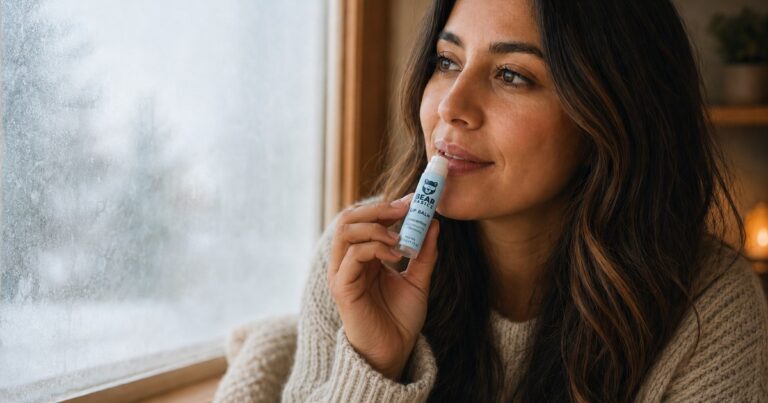
Lip balm can make lips feel worse when it contains irritating or drying ingredients — like menthol, camphor, strong flavors, or fragrances — or when constant licking and reapplying keeps lips stripped and never lets them heal. Your lips aren’t physically “addicted” to balm, but the habit-plus-irritation loop is very real. The fix is a plain, occlusive balm — think beeswax and simple oils, with no flavor or “tingle” — applied as needed rather than obsessively, plus cutting back on lip-licking. If lips crack, bleed, or won’t heal, see a doctor.
It sounds like a paradox — a product meant to soothe lips leaving them drier — but the experience is common and it’s real. Plenty of people find that the more diligently they use a particular balm, the more chapped and tight their lips feel, especially with the minty, medicated, or heavily flavored kinds.
Here’s the important distinction: it isn’t lip balm as a category that’s the problem. A plain, well-made balm is one of the best things you can do for dry lips. The trouble comes from two specific things — certain irritating or non-sealing ingredients, and the behavior loop those balms encourage. Get both of those right and balm goes back to being helpful.
“Lip balm makes lips worse” is half true. The wrong balm, used the wrong way, can. The right balm, used sensibly, is genuinely good for your lips.
The so-called lip balm cycle goes like this: your lips feel dry, so you apply a balm. If that balm irritates the delicate skin or doesn’t actually seal moisture in, your lips feel dry again soon after. So you apply more. And more. It feels like the balm is the only thing keeping your lips livable, when it may be quietly part of the problem.
You’ll often hear this described as “lip balm addiction.” That framing overstates it. There’s no strong evidence that lips become physically or chemically dependent on balm the way the word addiction implies. What’s actually happening is a habit reinforced by mild, ongoing irritation — a loop, not a chemical hook.
That’s good news, because loops can be broken. Once you swap the irritating balm for a plain, sealing one and ease off the compulsive reapplying, the cycle usually settles down within a week or two — no white-knuckle willpower required.
Lips get chapped so easily because they’re built differently from the rest of your skin. The skin on your lips is far thinner, and critically, it has few or no oil glands of its own. The rest of your face produces sebum that helps keep it moisturized and protected; your lips largely can’t do that for themselves.
They’re also constantly exposed — to wind, cold, dry indoor heat, sun, and the simple friction of talking, eating, and licking. With no built-in oil supply and heavy exposure, lips lose moisture quickly and have little natural defense against it.
This is exactly why a good balm helps: it stands in for the protective barrier your lips don’t make on their own. And it’s also why irritation hits lips so hard — that thin, defenseless skin reacts to harsh ingredients far more readily than tougher skin elsewhere would.
If a lip balm produces a cooling, tingling, or medicated sensation, that feeling is coming from ingredients that can irritate thin lip skin. The usual suspects are menthol, camphor, phenol, and sometimes salicylic acid. They feel like they’re doing something — and they are, just not the something you want.
That cooling sensation reads as “working,” but on already-chapped lips it’s often mild irritation. Irritation can drive a little inflammation and peeling, which feels like dryness, which sends you back for more balm. It’s the cycle in a nutshell.
None of these ingredients are dangerous, and some people tolerate them fine. But if your lips get worse rather than better on a minty or “medicated” balm, that’s a clear signal to drop the tingle entirely and choose something that does nothing but sit there and seal. Boring is the goal.
Flavored and scented lip balms are everywhere, and they’re a leading reason lips stay irritated. Added flavor and fragrance are among the most common causes of contact irritation and allergy in skincare generally, and lips — thin-skinned and often licked — are a prime spot for it to show up.
There’s also a behavioral catch with flavored balm, especially for kids: a tasty balm invites licking, which strips moisture and re-wets the lips over and over. So a sweet, fruity balm can work against you twice — once through the fragrance itself, and again by encouraging the very habit that dries lips out.
If you’re troubleshooting stubborn chapping, dropping all flavor and fragrance is one of the highest-yield changes you can make. An unscented, unflavored balm removes a whole category of possible irritants in a single step.
Beyond the tingle and the flavor, a few other ingredients can quietly undercut a lip balm. Certain drying alcohols — the volatile, quick-evaporating kind used in some formulas — can leave lips feeling stripped rather than soothed. They’re different from the fatty, moisturizing alcohols (like cetyl or stearyl alcohol), which are fine, so the word “alcohol” on a label isn’t automatically bad.
Strong acidic or exfoliating additives can also be too much for lips, as can heavy essential oils used at high levels for scent. The theme running through all of these is the same: lips do best with gentle, inert, sealing ingredients, and poorly with anything active, stripping, or strongly aromatic.
If you can’t explain what an ingredient is doing for your lips other than making them taste, smell, or tingle, it probably isn’t helping them heal.
One of the biggest drivers of chapped lips has nothing to do with any product: licking. It feels like it helps — your lips are dry, so a little moisture seems logical — but it does the opposite. Saliva evaporates fast and takes surface moisture with it, leaving lips drier than before. Saliva also contains digestive enzymes that can irritate the delicate skin with repeated exposure.
The catch is that irritating balms and lip-licking feed each other. A tingly or flavored balm can make lips feel like they need constant attention, so you lick and reapply in a loop. Breaking the licking habit is often as important as changing the balm.
A practical swap: every time you notice the urge to lick, reach for a plain balm instead. You’re replacing a drying behavior with a sealing one, and after a while the urge itself fades as your lips actually recover.
A good lip balm has one main job, and it’s not to add moisture — it’s to seal moisture in and shield lips from the elements. This is called occlusion. The balm forms a soft, protective layer over that thin, oil-gland-poor skin, slowing water loss and giving the lips a chance to recover on their own.
That’s why the best balms often feel almost boring: no cooling, no flavor, no drama — just a smooth, protective coat that lasts. A balm that needs reapplying every few minutes usually isn’t sealing well; a good one holds for a meaningful stretch and quietly does its work.
Understanding this reframes the whole question. You’re not looking for a balm that feels the most active or exciting. You’re looking for the one that protects most effectively and irritates least — and those are almost always the plainest ones on the shelf. Our guide to fixing chapped lips for good walks through the whole routine.
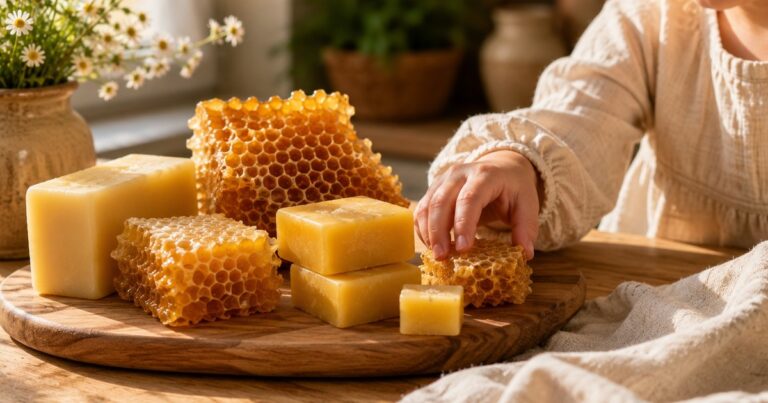
So what should a plain, sealing balm actually contain? A short list of recognizable, protective ingredients. Beeswax is a classic: it forms a breathable, protective film and gives balm its structure. Plant oils and butters add slip and conditioning, and a little vitamin E is a common, gentle antioxidant addition.
One honest note: because beeswax comes from bees, beeswax-based balms aren’t vegan. If that matters to you, plant-wax balms exist — just apply the same short-list, no-tingle standard when you choose one. If you want to understand this ingredient better, we cover what beeswax is in skincare in depth.
Breaking the lip balm cycle is refreshingly simple once you know what you’re aiming for. It’s less about willpower and more about removing the irritants and letting your lips do what they’re perfectly capable of doing on their own.
Expect a short adjustment period. If you’re coming off a heavily flavored or medicated balm, your lips may feel a little needy for the first few days as they recalibrate. Stick with the plain balm and the reduced licking, and most people notice real improvement within a week or two.
There’s no magic number, and chasing one misses the point. The right frequency is simply “when your lips actually feel dry.” With a good sealing balm, that ends up being far less often than people expect — a few times a day, plus before going out into wind or cold, is plenty for most.
The telltale sign of a problem isn’t applying too little; it’s applying constantly. If you find yourself reaching for balm every few minutes, that’s almost never a sign your lips need more — it’s a sign the balm isn’t sealing well or is mildly irritating you. The answer is a better balm, not a more frequent one.
Think of it like a good moisturizer for your face: you don’t reapply that every ten minutes, because it holds. Your lip balm should behave the same way. Quality of the seal beats quantity of applications every time.
Sometimes stubborn chapped lips aren’t about the balm at all, and it’s worth knowing the signs so you don’t keep swapping products when the real answer is elsewhere — sometimes a doctor.
See a doctor or dermatologist if your lips crack, bleed, or won’t heal despite a gentle balm; if you have persistent redness, scaling, or painful cracking at the corners of your mouth; or if the dryness came on suddenly and severely. Chronic lip issues can point to an allergy, a form of dermatitis, a nutritional factor, or a medication side effect — things a professional can identify.
Everyday factors matter too: dehydration, mouth-breathing, cold dry weather, and certain medications can all keep lips chapped no matter how good your balm is. A balm is for comfort and protection — it isn’t a treatment for a medical condition, so anything that looks medical deserves a real evaluation rather than another tube.
Pulling it together: lip balm isn’t the enemy, and your lips aren’t addicted. The whole thing comes down to choosing a plain, sealing balm, dropping the tingle and flavor, easing off the licking, and giving your lips a short window to recover.
Reach for a balm with a short, recognizable ingredient list — beeswax, a couple of simple oils, maybe a butter and some vitamin E — and nothing designed to cool, flavor, or medicate. Apply it when your lips feel dry, protect them from harsh weather, and otherwise leave them alone. That’s genuinely the whole method.
It’s the same philosophy we bring to everything: fewer, better ingredients, doing exactly the job they’re meant to do. If you like keeping the rest of your routine equally uncomplicated, our guide to simple skincare for the whole family follows the same idea.
Megan co-founded Bear Basics and leads design. As a mom, she writes our gentlest, most practical guides — on ingredients, sourcing, and simple family skincare — with an emphasis on honest, well-sourced, and simple. Read the full story →