What is anhydrous?
Water-free — no water in the formula.

Anhydrous just means water-free — balms, oils, and butters with no water in them. That one difference changes preservatives, concentration, shelf life, and how the product works on your skin.

“Anhydrous” simply means water-free — a skincare product made with no water. Balms, body butters, oils, salves, and lip balms are typically anhydrous; lotions and creams contain water. Because there’s no water for microbes to grow in, anhydrous products often need far fewer preservatives; they’re also more concentrated and work by sealing and softening skin rather than adding water. They’re not “better” than water-based products — just different, and especially good for sealing moisture into dry skin.
“Anhydrous” is one of those technical-sounding skincare words that turns out to be wonderfully simple: it just means water-free. An anhydrous product is simply one made with no water in it at all.
That single fact — no water — shapes everything about the product. Because water is what most microbes need to grow, water-free products often need far fewer preservatives. Because water isn’t taking up space, they’re more concentrated. And because they’re built from oils, butters, and waxes, they work by sealing and softening your skin rather than adding water to it.
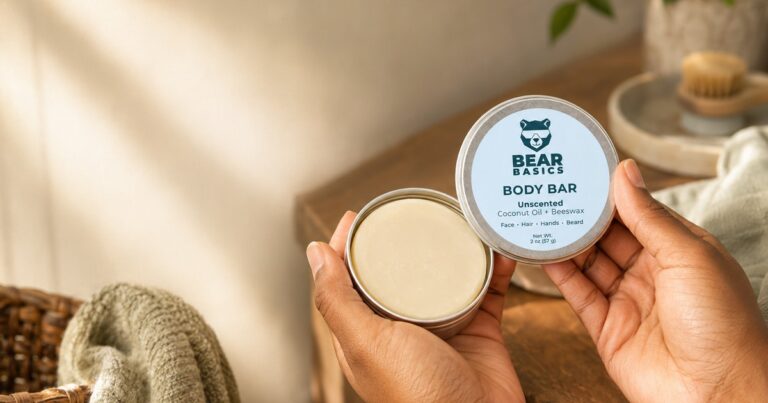
Your balms, body butters, lip balms, and lotion bars are almost all anhydrous. This guide explains exactly what that means, why it matters, the honest trade-offs, and how to spot water-free products on any label. For the related skill of reading any label, see our ingredient guides. Once you know the word, you’ll start noticing it everywhere — and understanding it quietly demystifies a whole category of natural skincare that can otherwise seem needlessly technical.
Anhydrous means “without water.” In skincare, it describes any product formulated with no water at all — typically oil-, butter-, or wax-based products like balms, salves, body butters, and lip balms. The opposite is a water-based product (most lotions and creams), which lists water (“aqua”) as one of its very first ingredients.
The easiest way to picture it: if a product pours or scoops as a rich balm, butter, or oil, it’s probably anhydrous. If it’s a light, fluid lotion or cream that spreads thin and quickly, it almost certainly contains water. That, in a nutshell, is the fundamental divide in moisturizers — water-based vs. water-free — and it explains most of the differences between them. Almost every question people have about why a balm behaves so differently from a lotion — why it’s richer, lasts longer, has a shorter ingredient list — traces back to this one thing: whether or not there’s water in it.
Here’s the most important consequence of going water-free, and it’s about safety and simplicity: water is what most microbes need to grow.
Bacteria and mold need water to thrive. A water-based product is a potential home for them, so it requires a robust preservative system. An anhydrous product doesn’t offer that water, so it’s a far less hospitable environment for microbes — and typically needs far fewer preservatives, sometimes none of the same kind.
This is one of the biggest reasons so many simple, natural products are anhydrous: going water-free lets them keep a short, clean ingredient list without needing the preservative systems that water-based products depend on. It’s honest to note this isn’t magic — anhydrous products aren’t sterile, and can still include a touch of antioxidant like vitamin E to keep the oils fresh over time — but the water-free approach genuinely simplifies preservation. This is one of the quiet reasons the natural-skincare world leans so heavily on balms and butters: they let a brand keep things simple and honest without cutting corners on safety, because the format itself does much of the preservation work that chemistry would otherwise have to.
Water often makes up a large share of a water-based lotion — sometimes most of it. Take the water out of the equation, and two useful things happen:
That’s why a small tin of balm can outlast a much bigger bottle of watery lotion, and why anhydrous products often have the kind of short, readable ingredient list we love — just a few oils, a butter, a wax — the kind of list you can read and understand at a glance. It fits naturally with a “only the bear necessities” approach. There’s a real elegance to it: instead of adding water and then adding the ingredients needed to keep that water safe, you simply leave the water out and let concentrated oils and butters do the work — fewer ingredients, each one pulling its weight. See how simpler formulas add up in the highest-impact swaps.
Water-free products tend to be quite shelf-stable — with one thing to watch.
Because there’s little water for microbes to grow in, anhydrous products often last a good while. The main risk is introducing water: dipping wet fingers into a balm, or getting water into the jar, can create a small spot where microbes could grow. That’s easy to avoid — use dry hands or a clean spatula, and keep the lid on between uses. Oils can eventually go rancid over long periods, which is why a touch of antioxidant (like vitamin E) is common. Kept dry and used sensibly, a good anhydrous balm stays fresh for a long time — often long enough that you’ll finish it well before freshness is ever a concern, since a little goes so far.
The clearest way to understand anhydrous products is next to their water-based cousins:
| Anhydrous (water-free) | Water-based | |
|---|---|---|
| Contains water? | No | Yes (often listed first) |
| Preservatives | Fewer needed | Robust system required |
| Concentration | High | Diluted by water |
| Feel | Rich, sealing | Light, quick |
| Adds water to skin? | No (seals it in) | Yes |
| Examples | Balms, butters, oils | Lotions, creams |
Neither column is the winner — they do different jobs. Water-based products give a light, hydrating feel and put water right where skin can use it; anhydrous products concentrate everything and excel at sealing that moisture in. Many people happily use both — a light water-based lotion in the morning and a rich anhydrous balm at night is a common, sensible pairing that gets the best of each.
You already own more anhydrous products than you might realize. Common water-free products include:
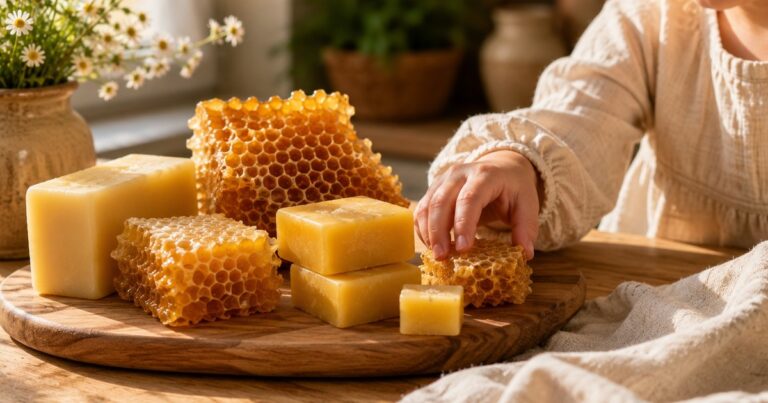
The common thread: they’re built from oils, butters, and waxes rather than water. If you love simple, minimal products, you’re probably already a fan of anhydrous skincare without knowing the word. The humble lip balm in your pocket is a perfect little example — pure wax and oil, no water, concentrated, and shelf-stable enough to live in a bag for months.
This is the most useful thing to understand about anhydrous skincare: they soften and seal, but they don’t add water.
Anhydrous products are rich in occlusive and emollient ingredients that smooth skin and lock moisture in — but since they contain no water, they don’t contribute water themselves. The trick: apply them over slightly damp skin (like right after a shower), so there’s moisture for them to seal in.
So “do they moisturize?” depends on what you mean. They’re superb at keeping skin moisturized by sealing — which is ideal for dry skin — but they work best with a little water underneath for them to trap and hold. This is exactly why the classic, oft-repeated advice is to moisturize on damp skin: it lets an anhydrous balm do its best work. Skip the damp step and you’re essentially sealing dry skin — still softening, but with less moisture underneath to lock in. It’s a tiny habit that makes a genuine difference in how well a water-free product performs. More on that in what a good balm actually does.
Water-free isn’t automatically better — here’s the balanced view:
Anhydrous products can feel richer or take a moment to sink in, and they don’t give the airy, instantly-absorbed feel some people love from a lotion. That’s not a flaw — it’s the trade-off for concentration and simplicity. Choose based on your skin and preference, not on which is trendy. Water-free skincare has had a real moment lately, which is lovely, but trendiness is a poor reason to pick a product — an oily-skinned person who loves a light lotion shouldn’t feel they’re doing it wrong.
Telling anhydrous from water-based takes about two seconds once you know the trick:
That’s it — checking for water at the top of the list instantly tells you which of the two kinds of product you’re actually holding. It’s a handy thing to know when you’re deciding what a product will actually do on your skin — and it saves you from being surprised when a “rich”-sounding product turns out to be mostly water, or a tiny tin turns out to punch far above its size.
Our balms, tallow products, and lip care are anhydrous by design — and it’s worth explaining why we like it.
Going water-free fits everything we’re after: it lets us keep short, recognizable ingredient lists without needing the preservative systems water demands; it makes each product concentrated, so a little genuinely lasts; and it makes them excellent at sealing moisture into dry skin, which is what our balms are for. It suits our “only the bear necessities” philosophy almost perfectly — fewer ingredients, each doing more. We’ll always be honest that anhydrous isn’t magic and isn’t right for every preference, but for simple, sealing, minimal skincare, it’s a natural fit — and it’s a big part of why our products can keep such short, readable ingredient lists while still doing their job well. Explore the full range to see the water-free approach in practice.
Three quick clarifications about water-free skincare:
The balanced takeaway: anhydrous is a simple, useful approach with real strengths — not a miracle, and certainly not a rule everyone must follow.
Anhydrous simply means water-free. Balms, butters, oils, and lip balms are typically anhydrous; lotions and creams contain water. Removing the water means fewer preservatives needed, a more concentrated product, often a simpler ingredient list, and good shelf stability — while the product works by sealing and softening skin rather than adding water.
It’s not better or worse than water-based skincare — just different, and especially good at sealing moisture into dry skin (apply over damp skin for best results). If you like simple, concentrated, minimally-preserved products with short ingredient lists, water-free is very likely your thing. Explore our anhydrous balms and oils, from lip care to tallow balms.
Megan co-founded Bear Basics and leads design. As a mom, she writes our gentlest, most practical guides — on ingredients, sourcing, and simple family skincare — with an emphasis on honest, well-sourced, and simple. Read the full story →