Spend $50, Get 10% Off

It's the gentle odor neutralizer that lets a deodorant skip baking soda. Here's what magnesium hydroxide does, why it's kinder to sensitive skin, and the one thing it doesn't do.

Magnesium hydroxide is a mild mineral that gently neutralizes body odor — the key ingredient in baking-soda-free natural deodorants. It keeps you fresh without the irritation baking soda often causes on sensitive underarms. Two things to keep in mind: it controls odor, not sweat (it's not an antiperspirant), and it's an odor neutralizer, not a medicine. If you've reacted to natural deodorant before, magnesium is very likely the ingredient that fixes it.
If you've ever wondered how a "baking-soda-free" natural deodorant still keeps you fresh, magnesium hydroxide is usually the answer. It's the quiet workhorse behind gentle odor control.
In one line: magnesium hydroxide is a mild mineral that gently neutralizes body odor. It does the odor-fighting job that baking soda does in other deodorants, but without baking soda's tendency to irritate sensitive skin. That's why it's become the ingredient of choice for people who want natural deodorant that actually agrees with their underarms.
Two honest caveats to keep in view as we go: it controls odor but doesn't stop sweat, and it's an odor neutralizer rather than a medicine. Within those honest lines, it's genuinely one of the best things to happen to natural deodorant. Let's unpack what it does and why it works.
What's nice about magnesium hydroxide is that it isn't a compromise. Sometimes the "gentle" version of an ingredient is also the weaker version, and you trade performance for comfort. That's not really the case here — magnesium delivers genuine, all-day odor control that stands up to baking soda, it just does it without picking a fight with your skin. You get to be both fresh and comfortable, which is exactly what a daily-use product should offer.
Magnesium hydroxide is a mild, alkaline mineral compound. You may already know it in another form: milk of magnesia is simply magnesium hydroxide suspended in water. In deodorant, it's used to gently neutralize the compounds behind body odor.
That milk-of-magnesia connection is a useful reference point — it's a long-familiar, gentle mineral, not some exotic new chemical. In fact, some people have long dabbed plain milk of magnesia under their arms as a DIY deodorant. A well-made magnesium deodorant just takes that same gentle odor-neutralizing idea and formulates it into a pleasant, easy-to-use stick or cream with skin-friendly ingredients around it.
That DIY history is actually a useful reassurance. When people first hear "magnesium hydroxide," the chemical-sounding name can raise an eyebrow — but it's the same gentle stuff that's sat in medicine cabinets for generations. A good deodorant simply spares you the mess of dabbing on a liquid and gives you a smooth, consistent, pleasant-to-apply version that also includes ingredients to keep your skin comfortable. Same idea, much better experience.
Spotting it is easy, because it goes by one clear name:
If you're shopping for a gentle, baking-soda-free deodorant, seeing "magnesium hydroxide" on the label is a good sign — it usually means the formula was designed with odor control and sensitive skin both in mind. And just as importantly, note what you don't want to see if baking soda bothers you: "sodium bicarbonate," which is baking soda. For the full label literacy, see how to read a skincare ingredient label.
Here's the mechanism in plain terms. Body odor isn't the sweat itself — sweat is nearly odorless. Odor develops as sweat is broken down on the skin, producing the acidic-smelling compounds we recognize as body odor.
Magnesium hydroxide, being gently alkaline, helps neutralize those odor compounds — think of it as gently balancing the conditions that let odor build up. The result is that you stay fresh, without the odor ever getting a foothold. It does this softly and steadily, which is exactly what you want from something you apply to delicate underarm skin every day.
Magnesium hydroxide neutralizes the smell, gently. It's not blocking anything or killing anything — it's quietly keeping odor from developing. Fresh, without the harshness.
That "not killing anything" point is worth dwelling on, because it's part of why magnesium is so gentle. Some odor approaches work by aggressively going after the bacteria on your skin, which can disrupt the natural balance of your underarms and, over time, make odor management harder. Magnesium's neutralize-the-odor approach sidesteps all of that. It manages the smell without waging war on your skin's ecosystem — a quieter, more sustainable way to stay fresh.
This is the whole reason magnesium hydroxide matters, so it's worth understanding clearly.
Baking soda (sodium bicarbonate) is an effective odor-fighter, which is why it's in so many natural deodorants — but it's quite alkaline, and skin is slightly acidic. That mismatch is why baking soda so commonly causes redness, itching, and stinging rashes on sensitive underarms. Magnesium hydroxide neutralizes odor while being far milder on the skin, so most people can wear it comfortably day after day.
It was almost certainly baking soda. Magnesium hydroxide is the gentle alternative that fixes it for most people — same fresh result, far less irritation. If you gave up on natural deodorant over a rash, a magnesium formula is very likely your answer.
Time for the honest caveat that keeps expectations right.
Magnesium hydroxide controls odor. It does not reduce sweat. Only antiperspirants (using aluminum) reduce sweat, and they're regulated as drugs for exactly that reason. A magnesium deodorant keeps you fresh while your body sweats normally.
This matters because if you judge a magnesium deodorant by dryness, you'll think it "failed" — when it's actually doing its job perfectly. The goal of a deodorant is freshness, not dryness. For the full picture, see natural deodorant vs antiperspirant.
Magnesium hydroxide works at a modest level — you don't need a lot for effective odor control.
It's typically used at a moderate level (often around 10%) — enough to control odor well while staying gentle. It works as part of a team, alongside moisture-absorbing powders (like arrowroot) and skin-friendly butters that make the deodorant pleasant to wear.
That teamwork is the mark of a good formula: magnesium for odor, a light powder for surface moisture, and nourishing butters for comfort — each doing a specific job, none of them harsh. It's a simple recipe that happens to work beautifully.
The "team" framing also explains why you shouldn't judge magnesium in isolation. On its own it neutralizes odor, but the powders and butters around it are what make a deodorant feel good going on and keep the underarm comfortable through the day. A thoughtful formula balances all three so that no single ingredient has to be pushed to a harsh level to do its job. That balance is the difference between a deodorant you tolerate and one you genuinely don't think about.
Magnesium hydroxide is a friend to nearly everyone, but it's a genuine game-changer for some:
For the large group of people who love the idea of natural deodorant but couldn't tolerate baking soda, magnesium is often the ingredient that finally makes it work — and often the reason a second attempt at natural deodorant succeeds where the first one failed.
The head-to-head, since this is the choice that matters most in natural deodorant:
| Magnesium Hydroxide | Baking Soda | |
|---|---|---|
| Controls odor | Yes | Yes |
| Gentle on skin | Much gentler | Often irritating |
| Alkalinity | Mild | High |
| Sensitive-skin friendly | Usually | Frequently not |
| Reduces sweat | No | No |
Both control odor; neither stops sweat. The deciding difference is comfort — and that's where magnesium wins clearly for sensitive skin.
Worth noting: baking soda isn't "bad," and plenty of people wear it happily with no trouble at all. If your skin tolerates it, there's no reason to switch on principle. The magnesium advantage matters specifically for the large group whose underarms react to baking soda's alkalinity — for them, it's the difference between wearing natural deodorant comfortably and giving up on it entirely. Choose based on your own skin, not on which ingredient sounds better.
Magnesium hydroxide is generally well tolerated, including by many people whose skin reacts to baking soda. It's a familiar, gentle mineral (remember, it's the milk-of-magnesia compound), used at a modest level in deodorant.
As with any product, a small number of people may be sensitive to any ingredient, so the sensible move with a new deodorant is to patch-test a small area first and see how your skin responds over a few days. If you get persistent irritation from any product, stop and check with a professional. But for the vast majority, magnesium hydroxide is a comfortable, everyday-friendly choice — that's the whole reason it's used.
If you're switching to a magnesium deodorant from an antiperspirant, remember there's still a short adjustment period as your body returns to sweating normally — that's about leaving aluminum behind, not about the magnesium. The magnesium itself is the gentle part; give the overall switch a week or two and judge freshness rather than dryness. For the full transition timeline, our week-by-week guide walks through exactly what to expect.
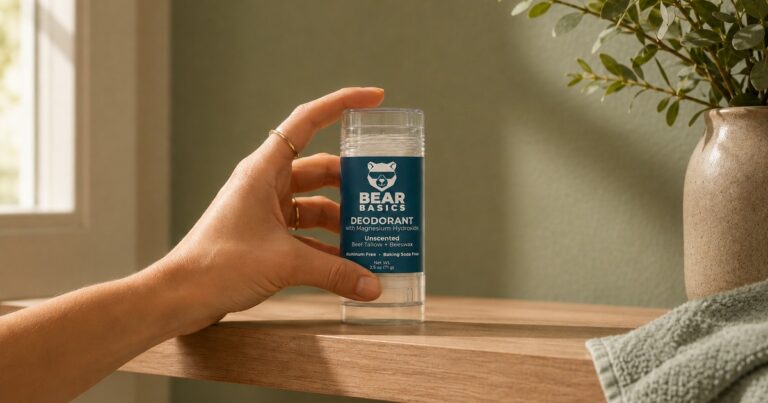
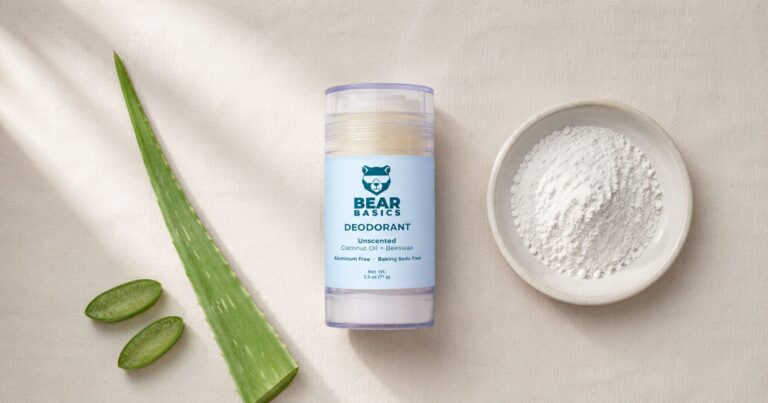
At Bear Basics, our deodorant is aluminum-free and baking-soda-free, built around magnesium hydroxide for exactly the reasons above: gentle, effective odor control that sensitive skin can wear every day. We'd rather people actually enjoy using their deodorant than tough out a baking-soda rash in the name of "natural."
It fits our whole approach — a short list of recognizable ingredients, each doing a clear job: magnesium for odor, a light powder for moisture, skin-friendly butters for comfort. Nothing harsh, nothing you need to look up. See it in the underarm line.
We landed on magnesium the same way we land on most of our formulation choices: by asking what actually works without asking too much of your skin. Baking soda would have been cheaper and simpler to formulate with, but it costs too many people a comfortable experience. Magnesium hydroxide does the job and lets far more people wear it every day, which to us is the entire point of making a deodorant in the first place.
Three quick clarifications:
Strip the myths and you're left with something genuinely useful: a gentle mineral that keeps you fresh without the harshness. That's plenty. It doesn't need to be a miracle mineral or a germ-killer to earn its place; being a gentle, reliable odor neutralizer is exactly the job, and it does it well.
Your quick field guide for deodorant labels:
Decode it once and choosing a sensitive-skin-friendly deodorant gets a lot easier.
This kind of quick label-reading is genuinely empowering, because deodorant marketing loves vague words like "gentle" and "clean" that don't tell you much. The ingredient list, on the other hand, doesn't lie. Two words — magnesium hydroxide present, sodium bicarbonate absent — tell you more about whether a deodorant will suit sensitive skin than any front-of-pack claim ever could. Trust the back of the package over the front.
Magnesium hydroxide is the gentle odor neutralizer that makes baking-soda-free deodorant possible. It's a mild, familiar mineral (the milk-of-magnesia compound) that keeps you fresh without the irritation baking soda so often causes — which is why it's the sensitive-skin-friendly choice. Two honest caveats: it controls odor, not sweat, and it's an odor neutralizer, not a medicine.
If you love the idea of natural deodorant but baking soda let you down, magnesium is very likely the fix. Patch-test, judge by freshness rather than dryness, and enjoy odor control your skin can actually live with, day in and day out, without bracing for a rash. Try it in our aluminum-free, baking-soda-free deodorant.
Ian founded Bear Basics on one idea: personal care built from a short list of food-grade ingredients we all recognize. Everything is small-batch and made in Colorado. Read the full story →