Spend $50, Get 10% Off

One jar, a whole shelf's worth of jobs. Here are ten genuinely useful ways to use coconut oil — how to do each one well — and the one time to skip it.

The most useful everyday uses for coconut oil are chapped lips, dry hands, cuticles, rough elbows and heels, frizzy hair ends, a gentle shave, makeup removal, baby's cradle cap, post-sun comfort, and an everyday body moisturizer. It absorbs fast and works head to toe. The main exception is acne-prone facial skin, where it rates higher on the comedogenic scale — keep it below the neck if that's you, and always choose a virgin, cold-pressed, food-grade oil.
Coconut oil earns its nursery-and-bathroom-staple status honestly: it's a single, food-grade ingredient that's light, fast-absorbing, and gentle enough for most skin. That combination makes it a genuine multitasker — the same jar that softens your lips can tame frizz, cushion a shave, or soothe wind-burned cheeks after a hike.
There's a practical beauty to that. Instead of ten single-purpose products cluttering the shelf, one honest jar covers a surprising amount of everyday ground. Below are the ten uses that actually stick — the ones you'll find yourself reaching for again and again — with a quick how-to for each so you get it right the first time. Tap any chip above to jump straight to the one you came for.
A quick note on why coconut oil specifically, rather than just "an oil." It's solid at room temperature, so it behaves like a soft balm you can keep in a jar without spills; it melts instantly on skin contact; it absorbs faster than most heavy butters; and, when it's pure, it's a single food-grade ingredient with no fragrance or additives to react to. That mix of properties is what makes it comfortable for daily, whole-body, whole-family use — and why it has quietly become a staple in so many homes rather than a one-trick product.
Coconut oil goes a long way. Almost every "it felt greasy" complaint traces back to using too much. Start with a pea-sized amount, warm it between your palms, and add more only if you genuinely need it.
Two more quick ground rules. First, quality matters: reach for virgin (unrefined), cold-pressed, food-grade coconut oil with a one-ingredient label — no added fragrance or fillers. Second, patch-test anything new on a small area first, especially for babies or sensitive skin. With those basics covered, here are the ten uses.
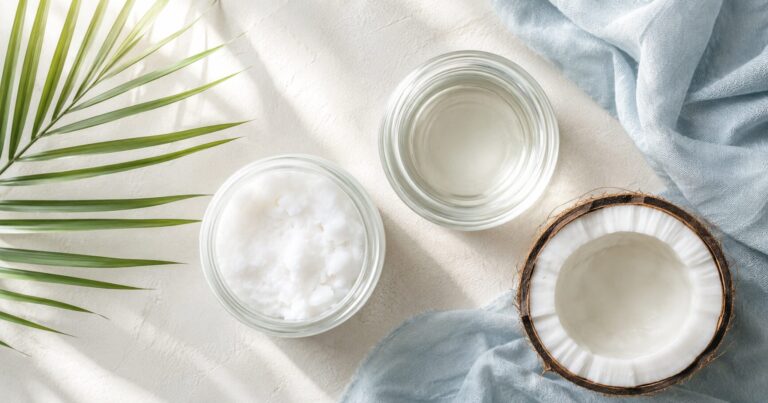
A quick word on texture, since it surprises first-timers: coconut oil is solid and creamy below about 76°F and turns to a clear liquid above it. Both states are perfectly good — the warmth of your hands melts it on contact either way. If your jar has gone liquid on a hot day, there's nothing wrong with it; just give it a stir if it re-solidifies unevenly.
A thin swipe softens and comforts dry, chapped lips, and because coconut oil absorbs quickly it won't leave a heavy, waxy film.
Use it straight from the jar or in a balm. For serious winter chapping, layer it over a richer balm at night so it has hours to sink in. Reapply after eating or drinking, since anything on your lips wears off with use. Why it works: lips have no oil glands of their own, so they dry out fast — a light occlusive layer helps hold moisture in. If your lips are chronically chapped, resist the urge to lick them (it makes it worse) and reach for the jar instead.
If your hands feel stripped and tight after a day of washing, a little coconut oil rebuilds that lost comfort fast.
Rub a pea-sized amount in after washing and pat away any excess. Keep a small jar by the sink so it becomes automatic. For overnight repair, apply a slightly thicker layer before bed and let it work while you sleep. Frequent hand-washing strips the natural oils that keep skin comfortable, which is exactly the gap a little coconut oil fills. Healthcare workers, cooks, and anyone through a Colorado winter will feel the difference fastest.
Massaging a little into your cuticles softens ragged edges and keeps hangnails down — a ten-second habit with a real payoff.
Do it after a shower when skin is soft, or last thing at night. Work a tiny amount into the base of each nail and the surrounding skin. Regular, small applications beat occasional heavy ones. Cuticles are just skin, and dry skin cracks and catches — that's where painful hangnails come from. A consistent ten-second habit keeps the whole nail area softer and tidier than any occasional deep treatment.
Coconut oil sinks into rough, dry patches quickly, softening elbows and heels that get neglected.
Apply to slightly damp skin after a bath or shower, then, for heels, pop on a pair of soft socks overnight. For deeply cracked heels, a richer balm may serve you better — coconut is best for maintenance, not deep repair. Elbows and heels have thicker skin and fewer oil glands, so they're the first places to go rough when the air dries out. Catching them early with light, regular moisturizing keeps them from reaching the deep-crack stage in the first place.
If your facial skin is acne-prone, be cautious. Coconut oil rates higher on the comedogenic scale (a 0–5 measure of how likely an ingredient is to clog pores), so on the face it can congest some people. Keep it below the neck, or reach for tallow or a blend for facial use.
A tiny amount smoothed through the ends tames frizz and adds a little shine, without the buildup of heavier products.
Emphasis on tiny — start with almost nothing warmed between your palms and apply only to the ends, never the roots. Too much reads greasy fast. It's easier to add more than to wash out an overdose. It works because it smooths the hair's outer layer and adds slip, which is what tames frizz and flyaways. Fine hair needs the lightest touch; thicker or curlier hair can usually handle a bit more before it looks weighed down.
Used as a shave slip, coconut oil cushions the blade and leaves skin feeling soft rather than tight afterward.
Smooth a thin layer over damp skin before shaving. It gives the razor a smooth glide and doubles as an after-shave comfort. If you're prone to clogged razors, rinse the blade often, since any oil can gum it up. The payoff is a closer, more comfortable shave with less of that tight, stripped feeling afterward — and one fewer specialized product to buy. It's a favorite for legs and faces alike, though a very oily-skinned face may prefer something lighter.
It melts through most makeup — including stubborn, water-resistant eye makeup — using one recognizable ingredient instead of a bottle of them.
Warm a little between your fingers, massage gently over dry skin to dissolve makeup, then wipe with a soft cloth and rinse. Keep it out of your eyes directly. Follow with your usual cleanser if you like a fully clean finish. Oil dissolves oil, which is why a plain fat lifts even long-wear and waterproof formulas that water-based removers struggle with. It's gentle around the delicate eye area too — just avoid getting it directly in the eyes, which can blur vision briefly.
Many parents use a little coconut oil to gently soften cradle-cap flakes before lightly brushing them away.
This is a comfort measure, not a treatment: apply a little, let it sit briefly, gently loosen flakes with a soft brush, and rinse. Patch-test first and check with your pediatrician — especially if the scalp looks red or irritated. See our full guide to coconut oil for babies. Cradle cap is common, harmless, and usually clears on its own; the oil simply makes the flakes easier and gentler to lift. Never force or scrub — the goal is comfort, and anything that looks inflamed or spreading is a reason to call your pediatrician rather than keep at it yourself.
After a windy hike or a long day outside, coconut oil soothes that tight, weather-worn feeling on cheeks and hands.
Apply a thin layer to clean skin once you're back indoors. Note the honest limit: it comforts after exposure, but it is not sun protection and never replaces sunscreen. For everyday sun defense, use a proper mineral SPF. After a day of wind and sun, skin often feels tight and raw at the surface; a light, gentle layer helps it feel comfortable again while it recovers. Think of it as after-care, not defense — the defense has to happen earlier, with actual sunscreen.
Warm a small amount between your palms and smooth it over damp skin after a shower for a light, fresh, non-heavy finish.
The after-shower window is the sweet spot — you're sealing in water that's already on the skin. A little covers a lot, so resist the urge to overdo it. In dry Colorado winters, this simple habit keeps skin comfortable head to toe. Because it absorbs faster than heavier balms, it suits people who dislike feeling greasy or waiting around to get dressed. If you run dry in winter and oily in summer, this is the use where you might rotate to a lighter touch (or a richer tallow balm) as the seasons change.
Since one jar is doing all these jobs, it's worth choosing well. The good news: the best choice is also the simplest.
Refined coconut oil isn't bad — it's just more neutral in scent and slightly more processed. For skin, most people prefer virgin. If you want the full breakdown, see virgin vs refined coconut oil. And if it firms up or melts with the seasons, that's normal — coconut oil is solid below about 76°F and liquid above it.
One more buying tip: watch the size you commit to. Because a little goes so far, a modest jar lasts most people a long time — there's rarely a reason to buy a giant tub that'll sit around for a year. Store it with the lid on, out of direct sun, and away from water (never dip wet fingers into a shared jar), and it'll stay fresh and clean for its whole life. A small scoop or clean, dry fingers is all you need.
An honest list includes the limits. Coconut oil is a simple, gentle moisturizer — not a cure-all. It won't do these jobs, and expecting it to can cause problems:
Kept in its lane, coconut oil is genuinely one of the most useful things you can own. Asked to be a medicine or a sunscreen, it isn't.
It's also worth being honest that coconut oil isn't automatically the best tool for every one of these jobs — it's the most versatile single tool. A dedicated tallow balm will out-cushion it on badly cracked heels; a proper lip balm with beeswax will out-last it in a brutal wind. What coconut oil wins on is breadth: it does a genuinely good job across a dozen everyday tasks from one inexpensive, recognizable jar. If you find yourself leaning hard on one specific use, that's a signal you might want a purpose-built product for that job — and coconut oil for everything else.
The uses above only help if the jar is actually within reach when you need it. The people who get the most out of coconut oil tend to do one simple thing: they keep it where the need happens. A small jar by the kitchen or bathroom sink turns "dry hands after washing" into a two-second habit instead of a good intention. One on the nightstand makes lips, cuticles, and heels part of winding down for bed.
Little, often, and in the right spot beats big, occasional, and out of sight — the same quiet, low-effort consistency that makes any simple routine actually work over the long run. Because a pea-sized amount does so much, a couple of small jars stationed around the house will outlast a single giant tub you forget about — and you'll find yourself reaching for it far more once it's never more than an arm's length away.
Ten uses, one honest jar. Coconut oil's whole appeal is that it's simple, gentle, and genuinely multipurpose — the kind of short-list product that quietly replaces a shelf of specialized ones. Choose a virgin, cold-pressed, food-grade oil, use less than you think, patch-test anything new, and keep it below the neck if your face is acne-prone.
That's the entire playbook. Keep a jar by the sink and another in the bathroom by the sink, and you'll be genuinely surprised how often you reach for it. When you're ready for one that fits this bill exactly, our coconut oil is a single, food-grade ingredient — and if you're curious how it stacks up against our other hero base, see beef tallow vs coconut oil.
Ian founded Bear Basics on one idea: personal care built from a short list of food-grade ingredients we all recognize. Everything is small-batch and made in Colorado. Read the full story →