Spend $50, Get 10% Off

Dry skin doesn’t need more products — it needs the right few, in the right order. Cleanse gently, moisturize on damp skin, seal it in, and protect the spots that dry out most.

The best everyday routine for dry skin is short and gentle: cleanse without stripping, moisturize while skin is still damp, seal it in with a richer balm, and protect the spots that dry out most — lips, hands, heels, and elbows — then go a little richer at night. Dry skin doesn’t need a ten-step routine; it needs a few well-chosen steps done consistently. The single most effective habit is moisturizing on damp skin to trap moisture, using simple, fragrance-free products your skin isn’t fighting against.
If your skin feels tight, flaky, or rough no matter what you do, the fix usually isn’t more products — it’s the right few, used the right way. Dry skin responds beautifully to a simple, consistent routine.
Here’s the whole thing in one breath: cleanse gently, moisturize on damp skin, seal it in with a richer balm, protect the spots that dry out most, and go a little richer at night. Five simple steps — no serums-upon-serums, no complicated regimen, no dozen bottles. The steps above are your map; the rest of this guide explains each one in turn, plus the everyday habits that make the whole routine actually work.
The goal is soft, comfortable skin that actually stays that way — with a routine simple enough that you’ll actually keep it up. For a family-wide take, see simple skincare for the whole family. And if you’ve tried a cabinet full of dry-skin products without much luck, take heart: the fix is usually less about finding a miracle cream and more about a couple of small changes to how and when you moisturize — changes that cost nothing and tend to work within days.
Dry skin happens when your skin loses water faster than it can hold onto it — its natural barrier isn’t sealing moisture in as well as it should, so water quietly escapes and skin feels tight and rough. Harsh products, hot water, over-washing, and low humidity all make it worse.
For dry skin, you’re doing two things: adding moisture (water and humectants) and then sealing it in (with occlusive fats and balms) so it doesn’t escape. Every step below serves one of those two goals. Keep that in mind and the routine makes intuitive sense.
That’s why gentleness matters so much: anything that strips your skin’s natural oils sets you back. The routine below is built to add moisture, seal it in, and avoid stripping — the three things dry skin needs most. It’s a helpful lens for the whole routine: whenever you’re deciding whether a product or habit is worth it, ask whether it adds moisture, seals moisture in, or protects your skin’s natural oils. If it does none of those — or actively strips them — dry skin can usually do without it.
The goal: clean skin without stripping it. Over-washing and harsh cleansers remove the natural oils dry skin desperately needs.
That last point matters for the next step: you want to leave skin slightly damp. Gentle cleansing sets up everything that follows — get this right and you’re halfway there. It’s easy to overlook cleansing as “just the boring first step,” but for dry skin it’s often where things go wrong — a too-hot, too-frequent, too-harsh wash undoes everything you do afterward, no matter how good your moisturizer is.
This is the single most effective habit for dry skin, and it costs nothing: moisturize while your skin is still slightly damp.
Applying moisturizer within a few minutes of washing, while skin is still damp, traps that water against your skin and locks in far more moisture than applying to bone-dry skin. Pat gently after washing, leave skin slightly damp, then moisturize right away.
If you change only one thing about your routine, make it this. So many people moisturize faithfully but on fully dry skin, hours after washing — and wonder why they’re still dry. Timing is half the battle. Moisturize damp, and moisturize promptly. Keep your moisturizer within arm’s reach of where you wash — by the shower, at the sink — so “while still damp” is realistic and not something you have to remember to run and do. The easier you make it, the more consistently it happens, and consistency is what actually softens dry skin over time.
The goal: lock the moisture in. After moisturizing damp skin, a richer, more occlusive product seals everything so it doesn’t evaporate away.
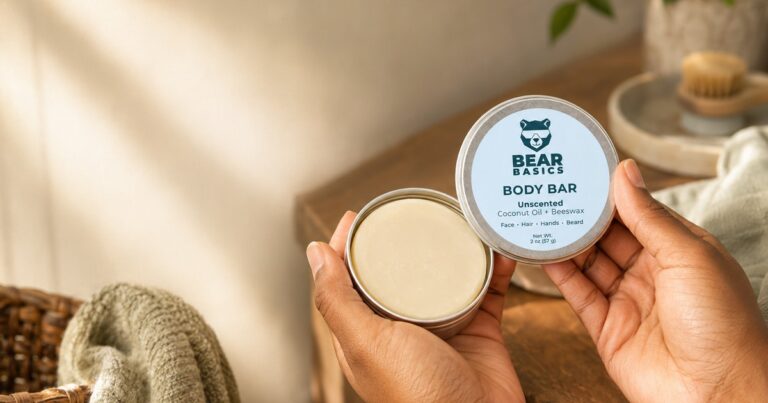
This is where a balm, body balm, or skin-compatible fat shines. Occlusive ingredients — beeswax, plant oils, tallow — form a light protective layer that dramatically slows moisture loss, the way a light coat of wax protects a surface from drying out. You don’t need much; a thin, well-pressed-in layer does the job better than a thick greasy one. For very dry skin especially, this sealing step is what makes moisture actually last through the day rather than evaporating within the hour. A little goes a long way; warm it between your fingers and press it into the driest areas. See what a good tallow balm does for more on why these fats work so well here. Think of this step as putting a lid on a glass of water: the moisturizer added the water, and the balm keeps it from evaporating. Skip the lid and much of what you just applied quietly disappears into the air within the hour — which is exactly why so many people feel dry again almost immediately after moisturizing.
Dry skin isn’t uniform — certain spots always dry out first. Give them a little extra:
These high-friction, high-exposure spots benefit from the richest part of your routine. Keeping a balm handy — by the sink, in a bag — makes it easy to hit them whenever they need it. Hands are the classic example: we wash them constantly, and every wash strips a little more moisture, so a balm kept by the sink and used after each wash does more for chapped hands than any single heavy application ever could.
Evening is when your routine can do the most, because your skin isn’t facing the day’s washing, weather, and friction.
At night, use a richer balm or a more generous layer than you would in the morning. With hours of undisturbed time and no hand-washing or wind, that richer seal can do its best work while you sleep — many people wake up noticeably softer.
A common pattern that works well: something lighter in the morning (so it sits nicely under clothes and daily life), and a richer balm at night to deeply seal and repair comfort. You don’t need separate fancy products — often it’s just more of your simple balm before bed. If your skin tends to feel worst in the morning, an overnight layer is often the missing piece — you’re giving your skin a long, uninterrupted stretch to drink in and hold onto moisture, with none of the day’s stripping to fight against.
A fair question: should you reach for a balm or a lotion? For dry skin, the answer leans toward richer, more occlusive options — but both have a place.
For persistent dry skin, a richer balm usually wins for sealing — but a lighter lotion is lovely for daytime or milder dryness. Many people use both — and that’s not indecision, it’s a sensible way to match the product to the moment, lighter when you’re out and about, richer when you’re winding down. We compare them in depth in lotion bar vs regular lotion.
You don’t need a long ingredient list to soften dry skin — you need the right simple ones. The most useful fall into two groups:
| Type | What it does | Examples |
|---|---|---|
| Occlusives | Seal moisture in | Beeswax, plant oils, tallow |
| Emollients | Soften & smooth skin | Coconut oil, castor oil, shea |
Skin-compatible fats like beef tallow are especially good for dry skin because they’re both emollient and occlusive — they soften and seal at once, which is why a single simple balm can often replace two or three separate products for dry skin. And simple, fragrance-free formulas are often gentlest for dry, reactive skin. When in doubt, a short list of recognizable oils, butters, and waxes is a good sign.
Products are only half of it — a few everyday habits make an outsized difference for dry skin:
None of these cost much, and together they can matter as much as any product you could buy — and unlike products, they’re free. Dry skin is often as much about protecting the moisture you already have as adding more — a leaky bucket doesn’t get fuller by pouring in more water; you fix the leaks.
If you’re doing everything and still dry, one of these is often why:
Fixing even one or two of these often turns things around. Dry skin rewards gentleness and consistency more than any expensive product — the people with the softest skin are usually the ones doing the simple things every single day, not the ones with the fullest bathroom shelf.
An honest, important note: a simple routine helps everyday dryness — but it isn’t a treatment for a skin condition.
If your skin is persistently itchy, cracked, inflamed, painful, or just isn’t improving with gentle care, it’s worth seeing a dermatologist. Dryness can sometimes point to conditions like eczema that benefit from professional guidance.
For gentle daily care of eczema-prone skin (with a professional guiding the plan), see our eczema-prone daily rhythm. The routine here is about comfort and everyday softness — for anything more, a professional is the right next step, and seeing one early tends to save a lot of frustration.
The best everyday routine for dry skin is refreshingly simple: cleanse gently, moisturize on damp skin, seal it in with a richer balm, protect the spots that dry out most, and go a little richer at night. Add a few gentle habits — lukewarm water, shorter washes, a humidifier — and you’ve covered the essentials that make the biggest difference.
Dry skin doesn’t need a complicated routine; it needs the right few steps done consistently. Simple, fragrance-free products with recognizable ingredients — balms, skin-compatible fats, a good lip balm — are all most people need to keep skin soft and comfortable year-round. Explore our simple skincare range, and reach for a richer tallow balm for the driest spots.
Megan co-founded Bear Basics and leads design. As a mom, she writes our gentlest, most practical guides — on ingredients, sourcing, and simple family skincare — with an emphasis on honest, well-sourced, and simple. Read the full story →