Same thing?
No — two different products.

One controls odor. The other reduces sweat. They're two different products solving two different problems — and most people confuse them. Here's the honest breakdown, including the aluminum question and how to choose.

A deodorant controls odor; an antiperspirant reduces sweat. Deodorant is a cosmetic that neutralizes the smell created when bacteria break down sweat, and it lets your body sweat normally. Antiperspirant is regulated as an over-the-counter drug because it uses aluminum salts to temporarily reduce sweat. So "natural deodorant vs antiperspirant" isn't really a fair fight — they do different jobs. Choose deodorant to stay fresh without aluminum; choose antiperspirant to stay visibly dry.
Walk down any personal-care aisle and "deodorant" and "antiperspirant" sit side by side, often on nearly identical-looking sticks, which is exactly why almost everyone uses the words interchangeably. They're not the same thing. Getting the difference straight makes the whole "which should I use" question simple.
Here it is in one line: a deodorant fights the smell; an antiperspirant fights the sweat. A deodorant is a cosmetic that keeps you from smelling. An antiperspirant is a drug that keeps you from sweating (or at least sweating as much). Everything else — the aluminum debate, the adjustment period, the "does natural even work" question — flows from that one distinction.
So when people ask which is "better," the honest answer is: better at what? If you want to stay fresh without aluminum and don't mind sweating normally, deodorant. If staying visibly dry is non-negotiable, antiperspirant. This guide walks through all of it — how each works, the aluminum question handled fairly, and how to choose or combine them.
It's worth naming why the mix-up is so universal: for decades the two were marketed almost identically, often as "deodorant" on the front even when the product was really an antiperspirant. Most people grew up assuming "deodorant" was just the generic word for the stick you put under your arms. So if you've been conflating them your whole life, that's not a knowledge gap on your part — it's the result of how these products were sold. Clearing it up is genuinely the first step to choosing well.
Let's pin down the two terms, because the regulatory difference tells you a lot.
A deodorant is a cosmetic that manages body odor. An antiperspirant is regulated as an over-the-counter drug, because it changes a body function — it uses aluminum salts to temporarily reduce sweat. Deodorant works on smell; antiperspirant works on sweat.
That's not a marketing distinction — it's a legal one. Because an antiperspirant alters how your body works, the FDA regulates it as a drug. A deodorant, which just addresses odor on the surface, is a cosmetic. Once you see that split, "which works better" reframes into "which job do I actually need done today."
This is also why you'll notice we're careful with our language throughout: we call ours a deodorant and talk about odor control, never "stops sweat." That's not lawyer-speak for its own sake — it's us staying honest about which product category we're actually in. A brand that promises a natural product will keep you bone-dry is quietly claiming to be an antiperspirant, and that should make you raise an eyebrow.
The mechanics make the difference concrete. Start with a fact that surprises people: sweat itself is nearly odorless. The smell comes later, when bacteria on your skin break sweat down into the compounds we recognize as body odor. That gives two totally different ways to attack the problem.
Antiperspirant changes what your body does. Deodorant works with your body doing its normal thing. That single difference explains almost every other comparison on this page.
This is the part everyone actually wants addressed, so let's do it fairly and without fear-mongering.
Antiperspirants use aluminum-based compounds to reduce sweat. Over the years, questions have circulated about aluminum and health. Here's the balanced picture: regulatory agencies, including the FDA, regulate antiperspirants as over-the-counter drugs and consider aluminum-based antiperspirant compounds safe as used. At the same time, plenty of people simply prefer to avoid aluminum — as a personal, values-based choice rather than because a clear danger has been established.
If avoiding aluminum matters to you, natural deodorant is your lane. If it doesn't, an antiperspirant is a legitimate choice. Both can be the right answer.
A useful way to think about it: this is closer to a diet preference than a safety recall. Some people avoid a particular ingredient because they'd simply rather keep their routine short and skip anything they don't feel they need — not because they've been shown it's harmful. That's a completely valid reason to choose aluminum-free, and it doesn't require believing anything scary about the people who choose otherwise. Preference is reason enough; you don't need a villain.
Worth stepping back for a second, because the whole framing of "stay bone-dry" treats sweat as a problem to eliminate. It isn't.
Sweating is how your body regulates temperature and cools itself — a normal, healthy function. A deodorant lets that system keep running while still keeping you socially fresh. For a lot of people, once they realize the "wetness" they worried about is just their body doing its job, going aluminum-free stops feeling like a downgrade and starts feeling natural.
The aim of a deodorant isn't dryness — it's freshness. You can sweat normally and still not smell. That's the whole design, and for everyday life it's usually plenty.
None of this means antiperspirant is wrong — for a hot wedding in a gray suit, staying visibly dry is a fair goal. It just means "dry" and "fresh" are two different targets.
There's also a comfort angle people don't expect. Some folks find that once they're off a sweat-blocker and using a good deodorant, their underarms actually feel better day to day — less of that clammy, plugged sensation, especially in warm weather. Others miss the dryness. Neither reaction is wrong; it's just a reminder that "which is better" is partly about how your own body prefers to feel, not only about what a label promises.
Here's the honest scorecard, no spin:
| Natural Deodorant | Antiperspirant | |
|---|---|---|
| Controls odor | Yes | Yes |
| Reduces sweat | No | Yes |
| Contains aluminum | No | Yes |
| Regulated as | Cosmetic | OTC drug |
| Lets skin function normally | Yes | Reduces sweat |
| Adjustment period | ~1–2 weeks | None |
| Best for | Everyday, aluminum-free freshness | Staying visibly dry |
Neither column loses. They're built for different priorities — which is the whole point of understanding the difference.
If you're switching from antiperspirant to deodorant, know this going in: there's usually a one-to-two-week adjustment, and it trips people up.
When you stop using aluminum, your sweat glands — which were being partially blocked — start working normally again. For a week or two, you notice more wetness than you're used to, and sometimes more odor while your routine resets. It's temporary. Most people who "fail" at natural deodorant quit in week one, right before it settles.
Week one is the peak of the adjustment, not a preview of forever. Push through, reapply as needed, and by week two things usually calm down.
Antiperspirant, by contrast, has no adjustment — it works from day one. That convenience is real, and it's part of why the switch takes a little patience. For the full timeline, see switching to natural deodorant, week by week.
Within natural deodorants, there's a second important split that decides whether the switch goes smoothly.
Baking soda is a cheap, effective odor-fighter, so it's in many natural deodorants. But it's alkaline, and skin is slightly acidic, so on sensitive underarms it can cause redness, itching, or a stinging rash. People often blame "natural deodorant" when the real culprit is one specific ingredient.
It was probably the baking soda. Switch to a baking-soda-free formula — many, including ours, use magnesium instead, which is far gentler on reactive skin. That one change fixes it for most people.
Being honest means matching the product to the person. Here's the split:
Plenty of people live in both columns depending on the day — which brings us to the next point.
Yes. There's no rule that says you must pick one forever. A common, sensible approach: use a natural deodorant day to day, and keep an antiperspirant on hand for the specific occasions when staying visibly dry matters — a wedding, a big presentation, a hot travel day.
Treating them as two tools for two jobs, rather than rival teams, takes all the pressure off the decision. You're not betraying "natural" by reaching for an antiperspirant before your sister's outdoor wedding in July. You're just using the right tool for that day.
One practical tip if you do keep both: give your everyday natural deodorant the consistent daily use, and treat the antiperspirant as the occasional exception rather than flip-flopping constantly. Your body settles into a rhythm with a steady routine, and bouncing back and forth every other day can keep you perpetually in that adjustment zone. Steady deodorant, occasional antiperspirant for the big stuff, is the combination most people find easiest to live with.
If you're comparing labels, a few ingredients tell you what you're getting:
The magnesium point is the quiet hero: it lets a natural deodorant fight odor effectively without leaning on skin-irritating baking soda. If you see it on a label, that's a good sign the formula was designed with sensitive skin in mind.
The broader lesson here is the same one we come back to across everything we make: a short, readable ingredient list is a feature, not a compromise. When you can look at a deodorant and recognize what each thing is doing — magnesium for odor, arrowroot for moisture, a butter or two for skin comfort — you can actually make an informed choice. A long list of unpronounceable extras doesn't make a product more advanced; it just makes it harder to know what you're putting on every single day.
Two myths cause most of the confusion here:
For the full honest answer on efficacy, see does natural deodorant actually work?
An honest comparison names the limits on both sides:
Knowing what each can't do is how you avoid disappointment — and how you pick the one that fits your actual priorities.
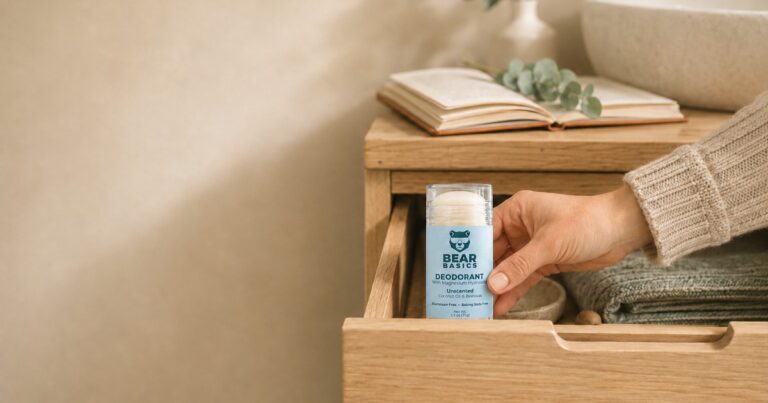
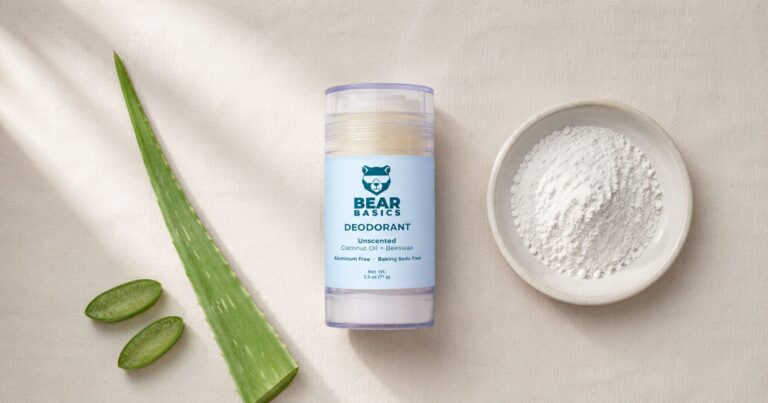
We make a natural deodorant, on purpose. It's aluminum-free and baking-soda-free, built around magnesium for gentle, effective odor control, with skin-friendly butters so it feels good enough to use every day. It won't stop you sweating — it's not pretending to. It keeps you fresh while your body does its normal thing.
If you've understood the difference and decided freshness-without-aluminum is your lane, that's exactly what we built. Browse the underarm line — and if you need an antiperspirant for a specific big day, that's a perfectly reasonable call too.
Ian founded Bear Basics on one idea: personal care built from a short list of food-grade ingredients we all recognize. Everything is small-batch and made in Colorado. Read the full story →