Good for skin?
Yes — especially dry & mature skin.

For most people — especially dry, mature, or barrier-stressed skin — yes. Here's the honest version, grounded in skin-barrier science rather than hype, plus who should reach for it and who might want something else.

Beef tallow is good for skin — especially dry, mature, and barrier-stressed skin — because its fatty-acid profile closely resembles the oils your skin makes on its own. That skin-like structure helps it absorb, cushion, and seal in moisture rather than sitting on top. The honest caveat: it's a simple moisturizer, not a medicine, and rigorous clinical trials on tallow specifically are limited — the strong case rests on barrier science and compatibility. Choose grass-fed, patch-test, and see a dermatologist for any skin condition.
Beef tallow has gone from a forgotten pantry fat to one of the most talked-about skincare ingredients on the internet, which means it's now buried under equal parts genuine enthusiasm and overblown claims. So let's cut to it.
For the large majority of people — and especially anyone with dry, mature, or barrier-stressed skin — beef tallow is a genuinely good moisturizer. The reason isn't magic; it's compatibility. Tallow's fats closely resemble the oils your own skin produces, so it tends to absorb and cushion rather than sitting on top like a coating. That's the honest core of why it works.
What it is not is a cure-all or a medicine. It won't treat acne, eczema, or any skin condition, and anyone promising that is overselling. Below, we'll separate the well-supported claims from the hype: what tallow is, why it's so skin-compatible, what the science can and can't say, who it suits best, and how to use it well. No breathless promises — just a clear, useful answer.
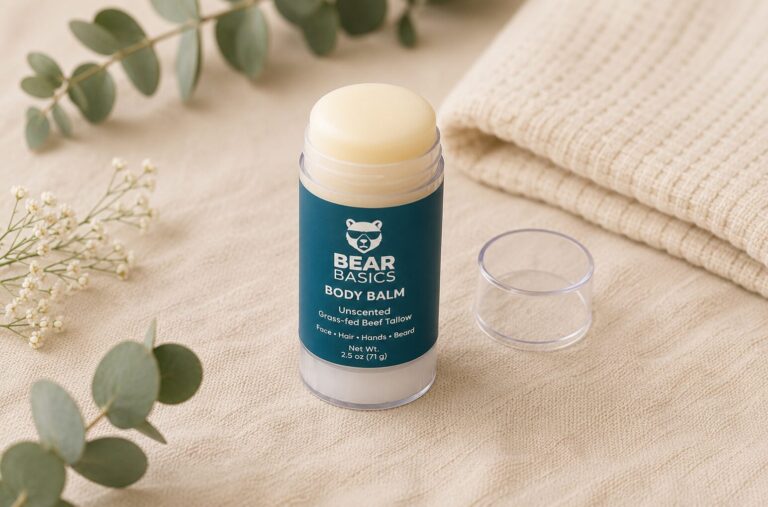
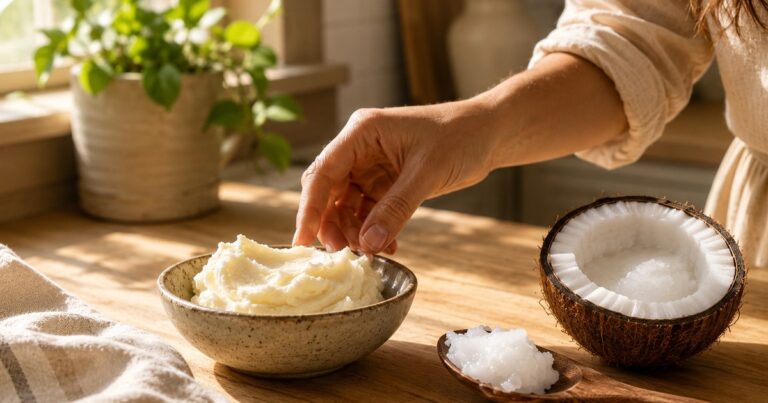
Beef tallow is rendered beef fat — the fat gently melted down, cleaned, and (in good products) whipped or blended into a smooth balm. Quality tallow starts with grass-fed cattle and is cleanly rendered so it's smooth and nearly scentless. Its label reads, simply, "grass-fed beef tallow."
That short label is the whole point. In a market full of moisturizers with twenty-plus ingredients you'd need to look up, tallow is one recognizable thing your great-grandparents would have known on sight. It's not a novel synthetic we're still learning about — it's one of the oldest skincare materials there is, back in fashion precisely because people are rediscovering how well simple things work.
Chemically, it's a blend of saturated and monounsaturated fatty acids — the same broad families your skin uses to build its own protective oils. You don't need to memorize that; the practical upshot is coming up next.
Here's the single most important idea in this whole guide, and the real reason tallow behaves so well on skin.
A fat is often called "biocompatible" with skin when its fatty-acid makeup resembles human sebum — the oil your skin naturally produces. Tallow is frequently described this way, which is part of why it tends to absorb and cushion rather than sit on the surface as a heavy film.
Because tallow's building blocks are close to your skin's own, your skin seems to "recognize" it. Instead of forming a greasy layer that just sits there, it settles in and supports the skin's natural barrier. Plant oils can be wonderful too, but many have a fatty-acid profile further from human skin — which is why some sit heavier or absorb differently. This compatibility is the foundation everything else rests on.
The title of this post promises what the science says, so let's be genuinely honest about the state of the evidence — because that honesty is exactly what most tallow hype skips.
The strong part: skin-barrier science is well established. Your skin's outer barrier is built largely from fatty acids and lipids, and ingredients rich in compatible fats can support that barrier and reduce moisture loss. Tallow fits that description well, and its resemblance to sebum is a real, describable property. On those grounds, the case for tallow as a barrier-supporting moisturizer is solid.
Large, rigorous clinical trials on beef tallow specifically are limited. So the fair statement is: the science supports the mechanism (barrier-compatible fats) and long traditional use backs the practice — but tallow doesn't have a mountain of modern head-to-head studies behind it. Anyone citing "studies prove" for dramatic claims is getting ahead of the evidence.
That's not a knock — plenty of gentle, effective moisturizers work by exactly this barrier-support mechanism. It just means we frame tallow as a well-reasoned, compatible moisturizer, not a clinically proven treatment.
It's worth naming why the trial gap exists, too: tallow is inexpensive, unpatentable, and un-trademarkable, so there's little commercial incentive to fund big studies on it — unlike a proprietary molecule a company can own. Absence of expensive trials isn't the same as evidence it doesn't work; it often just means nobody stood to profit from proving what generations already observed. That's the fair, grown-up way to hold it: promising and well-reasoned, with the honest asterisk that the formal literature is thin.
So what does that barrier support actually do for you day to day? Two things, mainly:
Because tallow is concentrated and water-free, a little lingers and keeps working. Many water-based lotions absorb and can leave skin feeling tight again within the hour — one reason people with stubborn dry skin often switch to tallow and don't look back.
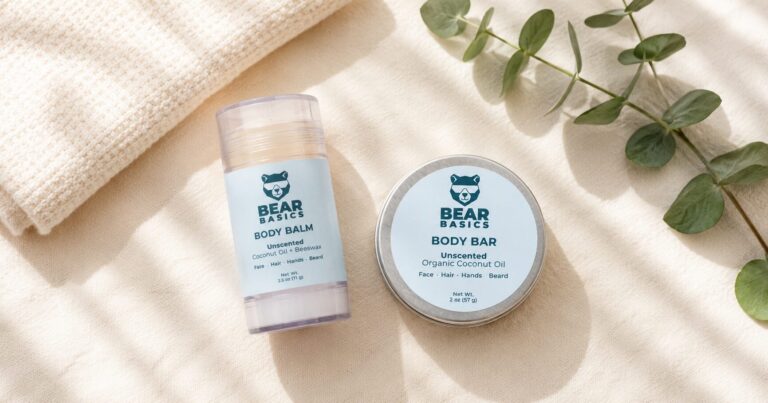
For the deeper comparison of the two natural bases, see beef tallow vs coconut oil.
There's a reason this matters most in a place like Colorado. Cold, dry, high-altitude air pulls moisture out of skin fast, and a light lotion often can't keep up — you moisturize, feel fine for twenty minutes, then feel tight again. A concentrated, barrier-supporting fat like tallow gives the skin something durable to hold onto through wind and dry heat. If you've ever felt like your moisturizer "disappears" in winter, that's the exact gap tallow is good at filling.
You'll often hear that tallow is "packed with vitamins," so let's put that in honest perspective. Grass-fed tallow naturally contains fat-soluble vitamins — A, D, E, and K among them — carried in its fats.
That's a genuine and pleasant bonus. But the main event isn't a vitamin dose; it's the barrier-supporting fats and the skin-like structure we've been describing. Think of the vitamins as a nice extra that rides along, not the headline benefit — and certainly not a reason to treat tallow as a supplement for your skin. Grass-fed sourcing is what makes the vitamin content more meaningful, which is one more reason it's worth looking for on the label.
Vitamins in a moisturizer are a bonus, not a treatment. The reliable, describable benefit of tallow is barrier support and moisture-sealing — everything else is a welcome side note.
Tallow suits many people, but it genuinely shines for some more than others. Here's the split:
If you're on the right-hand side, a lighter plant oil or a tallow-coconut blend may suit you better — the point isn't that tallow is universal, it's that it's excellent at the specific job of comforting dry, barrier-stressed skin.
Anytime a rich fat goes near the face, the pore-clogging question comes up. Here's the honest answer.
Comedogenic is a 0–5 score for how likely an ingredient is to clog pores. Tallow isn't on the classic plant-oil charts at all — animal fats generally aren't — so there's no pinned number for it. It's widely considered low-comedogenic because of how closely it resembles skin's own oils. More on the scale in do comedogenic ratings actually matter?
In practice, most people use tallow on face and body without congestion. If you're very acne-prone and want to use it on your face, patch-test a small area for a few days first. But as rich moisturizers go, tallow is a low-risk, well-tolerated choice.
One nuance worth knowing: how a finished balm behaves depends on the whole recipe, not just the tallow. A light, well-made tallow balm feels very different from one loaded with heavy add-ins, even though both contain tallow. That's another reason comedogenic numbers for single ingredients only tell you so much — patch-testing the actual product you plan to use beats worrying about a rating in the abstract, every time.
Not all tallow is equal, and the difference starts with the cattle. Grass-fed sourcing changes the fat itself — its fatty-acid balance and its naturally occurring vitamins — and clean rendering changes the scent and feel of the finished balm.
This is the single biggest quality lever, which is why we build on grass-fed tallow and say so plainly. When you shop, the tell is a short, honest label: "grass-fed beef tallow" and as few other words as possible. If a product buries its tallow in a long list of fillers and fragrance, that tells you something too. For the full sourcing story, see what "grass-fed" really means on a tallow label.
One practical worry stops people before they start: does it smell like a burger? Fair question, and the answer is reassuring.
Well-rendered, properly refined tallow has little to no scent. If a tallow product smells beefy, that points to under-refined tallow, not a problem with tallow itself. Clean rendering is part of what separates a pleasant balm from an off-putting one — another reason quality and sourcing matter. A good tallow balm should smell like almost nothing, or faintly of whatever natural additions (if any) are in it.
Nearly scentless = well-made. Noticeably beefy = under-refined. Your nose is a decent first-pass quality check.
Here's an honest side-by-side of tallow against a typical water-based lotion, so you can see where each wins:
| Beef Tallow | Typical Lotion | |
|---|---|---|
| Ingredients | One | Many |
| Added water | None | Usually |
| Needs preservatives | No (anhydrous) | Usually |
| Barrier support | High | Varies |
| Feel | Rich, cushioning | Light, fast |
| Best for | Dry, stubborn skin | Quick everyday hydration |
Neither is "the loser." Lotion is convenient and light; tallow is concentrated and barrier-supporting. For dry skin that lotion keeps failing, tallow is often the upgrade.
An honest "is it good for you" answer has to include the limits. Tallow is a simple moisturizer — here's what it isn't:
Using tallow well is easy, and a couple of small habits make it noticeably better:
A small amount goes a long way, so resist overapplying — a thin, absorbed layer beats a greasy coat. For a full routine built around dry skin, see the best everyday routine for naturally dry skin.
Is beef tallow good for your skin? For most people, and especially for dry, mature, or barrier-stressed skin: yes. Its greatest strength is compatibility — its fats resemble your skin's own, so it absorbs, cushions, and seals in moisture where lighter products fall short. The naturally occurring vitamins in grass-fed tallow are a nice bonus on top.
The honest framing is just as important as the yes: tallow is a simple, well-reasoned moisturizer backed by barrier science and long use — not a clinically proven treatment, and not a fix for skin conditions. Choose grass-fed, keep the amount small, patch-test, and see a dermatologist for anything medical. Within those honest lines, tallow is one of the best simple things you can put on dry skin. Explore our beef tallow line to try it.
Ian founded Bear Basics on one idea: personal care built from a short list of food-grade ingredients we all recognize. Everything is small-batch and made in Colorado. Read the full story →