Lighter feel?
Whipped — soft & airy.

Same fat, different texture — whipped is soft, airy, and spreads easily; hard is firm, concentrated, and travels well. Here's how to choose between them.

Whipped and hard tallow are the same moisturizing fat with a different texture. Whipped tallow is aerated (and often blended with a little liquid oil) so it’s soft, light, airy, and easy to spread; hard tallow is a firm, concentrated balm that holds its shape and needs a little warming. Both moisturize equally well, so the choice is about feel and convenience: whipped is lighter and easier to apply (nice for the face and daily use), while hard is more concentrated and travels well. Pick the texture you prefer — and if you’re weighing tallow against other fats entirely, see beef tallow vs coconut oil.
If you’ve shopped for tallow skincare, you’ve probably seen it sold two ways: whipped and hard (a firm balm). So what’s actually different between them — and does the difference matter for your skin?
The honest answer: they’re the same base fat, just a different texture. Whipped tallow is aerated — whipped to incorporate air, and often blended with a little liquid oil — which makes it soft, light, airy, and effortless to spread. Hard tallow is a firmer, denser balm that holds its shape and needs a little warming between your fingers to melt in.
Because they’re the same fat, both moisturize your skin exactly the same way. The difference is all about feel, application, and how well they travel — practical, everyday things, not skincare performance. This guide compares the two point by point so you can confidently pick the one you’ll actually enjoy reaching for. For what tallow does in general, see beef tallow skincare benefits. The happy news is that this is a low-stakes decision: unlike choosing between two different ingredients, here you’re choosing between two textures of the exact same thing, so you can’t really pick “wrong” — only pick the feel you enjoy more.
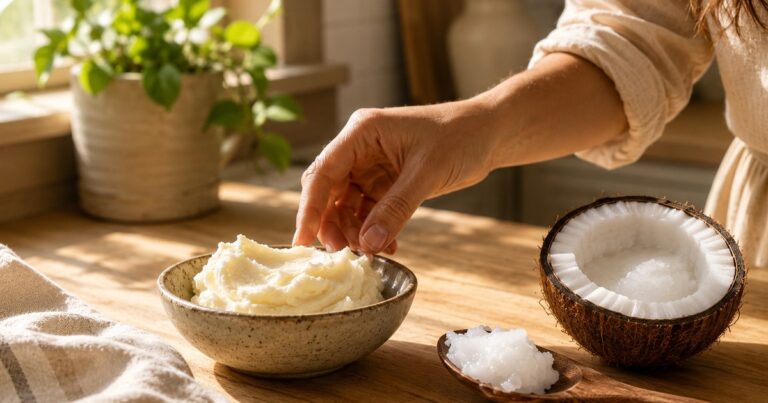
Whipped tallow is the light, fluffy version. It’s made by gently warming tallow and whipping air into it — usually with a little liquid oil added — to create a soft, airy, almost mousse-like texture.
The appeal is how easy and light it feels: it scoops effortlessly, spreads thinly, and melts into skin with almost no warming needed. That lightness makes it many people’s favorite for the face and for everyday, all-over use, where a light, quick-to-apply moisturizer is ideal. The trade-offs are minor: because it contains air (and often added oil), it’s a little less dense than firm tallow, and it can soften and lose some of its fluffy look in warm conditions or a hot bag. But for pure ease and a lighter feel, whipped is lovely. It’s often the version people reach for first when they’re new to tallow, because the soft, mousse-like texture feels familiar and approachable — nothing like the dense block of fat some people picture when they hear “tallow.”
Hard tallow is the classic, firm balm. It’s tallow (sometimes with a little beeswax or a couple of minimal additions) left dense and solid — the traditional, time-tested, minimally-processed form of tallow skincare.
Its strengths are concentration and durability: it’s dense, so a very little goes a long way and every scoop is highly concentrated; it holds its shape well; and it travels reliably without melting as easily as whipped. The trade-off is that it needs a little warming — you rub a small amount between your fingers for a few seconds to melt it before it spreads. Many people love that firmer, richer, more substantial feel and the reassuring way a solid balm simply lasts and travels without any drama. It’s the go-to for targeted dry spots (heels, elbows) and for tucking in a bag without worrying about the texture. There’s also something satisfyingly honest about a firm balm — it’s tallow in close to its natural, minimally-fussed-with state, which appeals to people who like their skincare as simple and unprocessed as possible.
The whole difference comes down to one processing step — whipping:
That’s really it. Same tallow, one whipped and one left as it is — that’s the entire story of the difference. Everything else you might read about whipped versus hard tallow flows from that single choice of whether or not to whip air into the fat. Note that grass-fed tallow tends to be softer and creamier to begin with, which makes it especially pleasant to whip into a light, airy texture — more on sourcing in is beef tallow good for your skin?
This is where you’ll notice the difference most — on your fingers and your skin:
Both leave your skin feeling exactly the same once they’ve absorbed — soft, smooth, and sealed — but the experience of applying them differs. Whipped feels lighter and more effortless going on, almost like a mousse; hard feels more substantial, rich, and traditional. Neither is right or wrong; it’s genuinely a matter of which texture you enjoy. Some people love the airy, cloud-like ease of whipped; others prefer the honest, no-frills density of a firm balm. It’s a bit like the difference between whipped butter and a stick of butter — identical underneath, but one feels light and spreadable while the other feels rich and solid, and people have genuine preferences between them.
The application differs slightly, and it’s worth knowing:
Whipped is soft enough to scoop and spread straight away — little to no warming needed. Hard should be rubbed between clean fingers for a few seconds to melt before you press it into skin. Either way, the rest is the same: apply to slightly damp skin, and use only a small amount.
This is why whipped is often called “easier” — there’s simply one less step between you and soft skin. But warming firm tallow takes only a couple of seconds, so it’s a small difference in practice. If you like a ritual, warming a firm balm between your palms for a moment can even be part of the appeal; if you’d rather just scoop and go, whipped removes that step entirely. Both work best pressed into slightly damp skin in a thin layer. And with either texture, the golden rule is the same: use less than you think. A little tallow goes a long way, whipped or hard, so start small and add more only if a spot still feels dry.
Does one suit the face and the other the body? Loosely, yes — though both work anywhere:
In practice, plenty of people keep both — whipped for the face and daily use, hard for heels, elbows, and the travel bag — and get the best of each without ever having to commit to just one. If you’re acne-prone, patch-test either on the face and keep the layer thin — the texture doesn’t change how the fat behaves on your pores, so the same patch-test caution applies to both whipped and hard, since the fat itself is identical.
One practical difference worth flagging, especially in summer or for travel:
Hard tallow travels better. Its firm, dense texture holds up in a warm bag or hot weather far more reliably than whipped, which — being soft and airy to begin with — can melt down and lose its fluffy look in heat far more readily. If whipped tallow softens, it’s still perfectly good to use; it just may not look as airy until it firms back up in a cooler spot. So for a beach trip, a hot car, an airplane, or a summer handbag, hard tallow is the more dependable, mess-free choice. At home in a cool cupboard, either is fine, and whipped tallow that has softened will usually firm back up and largely recover its texture once it cools down again.
Everything in one place:
| Whipped | Hard | |
|---|---|---|
| Texture | Soft, airy | Firm, dense |
| Application | Little warming needed | Warm it first |
| Feel on skin | Light | Rich |
| Concentration | Slightly less dense | More concentrated |
| Travel / heat | Can soften | Holds shape |
| Moisturizes? | Equally | Equally |
| Best for | Face, daily use | Dry spots, travel |
A quick guide to picking:
There’s truly no wrong answer — both are simply the same good, skin-compatible tallow underneath. Choose the texture and convenience that best fit how you’ll actually use it day to day, and you’ll be happy either way. If you’re still torn, a good rule of thumb is to start with whipped if this is your first tallow product — the easy, light texture makes the transition from a regular lotion feel natural — and add a firm balm later for travel and rough spots once you know you love tallow.
A little insight for the curious: whipped tallow is simply firm tallow that’s been aerated.
People who make their own tallow skincare often whip it — gently warming the tallow and whipping air in, sometimes with a little liquid oil — to get that soft, light, scoopable texture at home. So if you happen to buy hard tallow and later wish it were softer, you’re essentially wishing for the whipped version of the very same fat you already have. It’s a nice reminder that the two aren’t different products so much as the same product finished two ways. That’s genuinely useful to know as a shopper: you’re never really comparing two different formulas, just deciding how much air and softness you want in the same honest fat. (If you do whip your own, a small amount of liquid oil helps keep it soft and scoopable.)
Three quick clarifications:
The balanced takeaway: whipped and hard are the same tallow in two textures — pick by feel, use, and how much you travel. There’s no premium version and no basic version here — just two textures of one good ingredient, each better suited to slightly different moments in your routine.
Whipped vs hard tallow comes down to texture, not substance. Whipped is aerated (and often blended with a little oil) for a soft, light, easy-to-spread feel — lovely for the face and daily use. Hard is a firm, dense, concentrated balm that holds its shape, travels well, and suits targeted dry spots — it just needs a little warming. Both moisturize identically, because they’re the same fat.
Choose whipped for lightness and ease, hard for concentration and travel — or, like plenty of people, simply keep both on hand for different moments and seasons. Either way you’re getting the same simple, skin-compatible tallow. Explore our tallow line to find the texture you’ll reach for again and again, or browse the full range.
Megan co-founded Bear Basics and leads design. As a mom, she writes our gentlest, most practical guides — on ingredients, sourcing, and simple family skincare — with an emphasis on honest, well-sourced, and simple. Read the full story →