Spend $50, Get 10% Off

Not all swaps are equal. These five give you the most benefit for the least effort — the most-used, longest-lingering products where simpler genuinely wins.

The five highest-impact personal-care swaps are your deodorant, everyday moisturizer, lip balm, body cleanser, and going fragrance-free across the board. They're the most-used, longest-lingering products — the ones where a shorter, fragrance-free ingredient list makes the single biggest, most noticeable difference for the least effort. Swap them one at a time as things run out. And to be clear: this is about simplifying and suiting sensitive skin — a preference and an upgrade, not a panic about conventional products, which are regulated and generally safe.
If you're simplifying your personal care, here's a liberating truth: you don't have to change everything, and you definitely shouldn't try to at once. A handful of swaps deliver most of the benefit — and the rest barely move the needle.
So rather than a giant overhaul, this is a focused list of the five swaps with the biggest impact: the products where switching to something simpler and fragrance-free genuinely matters, ranked by how much you use them and how long they sit on your skin. Do these five and you've done the meaningful work. Tap any to jump ahead.
The reason this focused approach works better than a total overhaul is simple: overhauls get abandoned. Trying to replace fifteen products in a weekend is expensive, overwhelming, and easy to give up on halfway. Five clear swaps, done as things run out, is a plan you'll actually finish — and finishing the high-impact five beats half-finishing an ambitious purge every time.
One honest note up front: this is about preference and comfort — simpler ingredient lists, fewer fragrances — not fear. Conventional products are regulated and generally considered safe; these swaps are upgrades you might like, not rescues from danger. Keeping that framing matters, because the "clean" world can tip into fear-mongering fast, and anxiety is a terrible reason to change your routine. Do these swaps because you genuinely prefer a shorter list and less fragrance, not because someone scared you into it — you'll make calmer, better choices that way, and you'll actually enjoy the process instead of dreading it as one more thing to worry about.
What makes a swap high-impact? Three factors, and the best swaps hit all three:
The products worth swapping first are the ones you use daily, that stay on your skin (leave-on beats rinse-off), and where a simpler formula removes a common irritant like fragrance. Score high on all three and it's a top swap; score low and it can safely wait.
That's why deodorant and daily moisturizer top the list — daily use, leave-on, skin-contact — while something you use occasionally and rinse off quickly matters far less. Keep this formula in mind and you can spot the high-impact swaps in your own routine, even beyond this list. This formula is genuinely the most useful thing in this whole post, more than any specific product recommendation. Products change and brands come and go, but the logic of what's worth swapping stays the same. It's a portable little rule: whenever you're wondering whether a swap is worth the effort, ask how often you use the product, whether it stays on your skin, and whether a simpler version removes a common irritant. Two or three yeses means it's probably worth doing; mostly noes means it can wait. You'll never have to memorize a priority list again — you can just reason it out for your own routine.
Just as useful as knowing what to swap first is knowing what you can safely deprioritize — because chasing low-impact swaps is how people burn out on the whole idea.
Products you use only occasionally, or that rinse off in seconds, simply don't earn a high priority. A specialty mask you use once a month, a shampoo that's on your scalp for thirty seconds, a product you barely touch — swapping these gives you a fraction of the benefit of simplifying your daily deodorant or moisturizer, for the same effort and cost. There's nothing wrong with getting to them eventually, but they're the dessert, not the main course. Getting to them is optional and low-stakes; you can swap a rarely-used product on a whim whenever one runs out, without it ever being a priority or a source of guilt if you don't.
If you find yourself agonizing over a rarely-used or quickly-rinsed product while your daily leave-ons are still on the old formula, you've got the priorities backwards. Nail the five that matter; let the rest wait. There's no prize for a fully swapped bathroom cabinet, and the daily leave-on products are where your skin actually notices the difference.
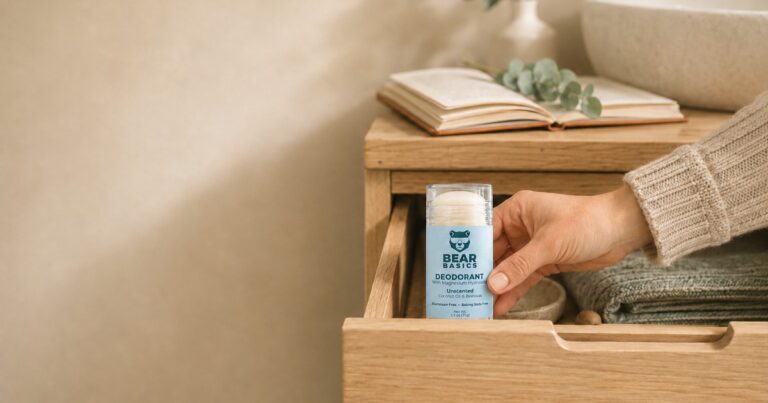
Deodorant is used every single day and stays on your skin, so it's one of the highest-impact things to simplify. Swapping to an aluminum-free, baking-soda-free deodorant is an easy, once-and-done change with daily payoff.
How: when your current one runs low, try a simple magnesium-based deodorant. Judge it by odor (not dryness), give it a two-week adjustment, and you've upgraded a daily habit for good. This one's a classic first swap for a reason. It's also a swap you feel every day, which makes it satisfying: every morning, you're using something you deliberately chose and feel good about, on a part of your routine that used to be autopilot. That small daily reinforcement is part of why deodorant is such a motivating place to begin — it makes the rest of the swaps feel worth doing.
Whatever you put on your skin daily and leave on is worth simplifying, and your body/hand moisturizer is a prime target. A shorter, fragrance-free ingredient list here touches a lot of skin, a lot of the time.
How: replace your lotion, as it runs out, with a simple balm, lotion bar, or short-list moisturizer. Fragrance-free is the key quality. Bonus: a good multipurpose balm can replace several single-use products at once. This is the swap that quietly declutters your whole cabinet. When one simple balm handles your dry hands, elbows, shins, and cuticles, you stop needing a separate product for each, which is easier on your budget, your shelf, and your decision-making, and means fewer half-empty bottles cluttering the cabinet. Simplifying your moisturizer often simplifies three or four other purchases along with it.
Lip balm is used constantly and sits right on your lips, so a simpler one is a genuinely high-impact swap — especially since some balms (with menthol, camphor, or fragrance) can actually irritate.
How: switch to a simple, occlusive, fragrance-free balm with a short list — beeswax and skin-friendly oils. You'll likely find your lips do better without the tingly, flavored additives. Small product, outsized daily impact. It's easy to overlook lip balm because the product is tiny, but think about how often it touches your lips — many times a day, every day. Few products in your routine get that much repeated skin contact, which is exactly why the quality of the ingredients matters more here than the small size suggests. A simple, non-irritating balm you reapply constantly beats a tingly one that quietly keeps your lips needing it.
You use it often, and while it rinses off, a harsh or heavily-fragranced cleanser can leave skin tight, dry, or irritated. Simplifying it is a quiet win for comfortable skin.
How: swap to a gentle, simple, fragrance-free cleanser or bar. You're not trying to strip your skin — just clean it kindly. Many people notice less post-shower tightness after this one change alone. The key mindset shift is that a cleanser's job is to gently clean, not to strip. We're often trained to equate squeaky-clean tightness with 'working,' but that tight feeling is usually a sign your skin's natural oils have been stripped away. A gentle, simple cleanser leaves skin comfortable rather than taut, and pairs beautifully with the simpler moisturizer from swap two.
The order roughly follows the impact formula: daily leave-on products (deodorant, moisturizer, lip balm) first, then frequent items (cleanser), then the fragrance-free habit that ties it all together. Highest use and longest contact, first — that's the whole ordering principle in a sentence.
This is the meta-swap that ties the others together: choosing fragrance-free across your routine. Fragrance is one of the most common irritants in personal care, so reducing it has broad, compounding benefits — especially for sensitive skin.
How: as you make each swap above, simply favor the fragrance-free version. It's less a single product change and more a habit — read the list for 'fragrance' or 'parfum' and simply skip it where you reasonably can. The payoff shows up across your whole routine. Think of fragrance-free less as a product and more as a default setting you apply everywhere. Fragrance is genuinely one of the most common culprits behind mystery irritation, and because it hides in so many products, quietly reducing it across the board removes a trigger you might not even have known you were reacting to. For anyone with sensitive skin, this single habit is often the most transformative item on the whole list, quietly doing more good than any single product swap.
The best way to make these swaps is gradually — one product at a time, as each runs out. There's no need for a big shopping spree or a cabinet purge.
Done this way, five high-impact swaps turn into a handful of painless decisions spread over time. For the full gradual method, see transitioning your family to cleaner skincare, one swap at a time.
Whatever category you're swapping, the same two qualities cut through all the marketing:
Read the ingredient list, not the buzzwords — it's the honest, regulated part of the package. A short, fragrance-free list tells you more than any slogan. This one habit — flipping the product over and reading the actual ingredients — makes you immune to nearly every marketing trick in the category, in either direction. You stop being sold to and start choosing for yourself.
A quick word on cost, since "simpler" shouldn't mean "pricier." Because you swap only as products run out, the expense spreads across normal shopping — no big outlay. Simple products are often affordable, and multipurpose items (a balm for lips, hands, and dry patches) can replace several single-use products, saving money and space. Don't let "clean = costly" marketing convince you otherwise; some of the best simple swaps are the humblest, cheapest ones on the shelf. A plain, short-ingredient balm or a simple bar cleanser rarely carries the premium price of a heavily-marketed "clean beauty" product, yet it often does the job better for sensitive skin precisely because there's less in it. Simplicity and affordability tend to travel together, which is a nice bonus when you're trying to upgrade a whole routine.
Here's the encouraging part about doing the high-impact five: their benefits compound rather than just adding up. Simplify your cleanser and your moisturizer together, and each works better because the other isn't undoing it — gentle cleansing leaves skin comfortable for a simple moisturizer to seal. Go fragrance-free across the routine, and you remove a common irritant from several products at once, so any lingering sensitivity has fewer places to hide.
That's why five focused swaps punch above their weight. You're not just improving five products in isolation; you're simplifying a system, and the pieces start reinforcing each other in ways that a single swap in isolation never could. People often notice that once the daily leave-on products are simple and fragrance-free, little nagging irritations they'd assumed were just "their skin" quietly settle down. That compounding effect is the real reward for prioritizing well.
A simpler routine isn't just gentler — it's easier to troubleshoot. When something does react, a short list of simple products makes the culprit obvious, instead of leaving you guessing across a dozen fragranced formulas.
You don't need to overhaul your whole routine to feel the benefit of simpler personal care. Five swaps — deodorant, everyday moisturizer, lip balm, body cleanser, and going fragrance-free — cover the products you use most and that sit on your skin longest, which is exactly where simpler genuinely wins and where you'll actually feel the difference day to day. Do these and you've done the meaningful work — the remaining products can wait, or be skipped entirely.
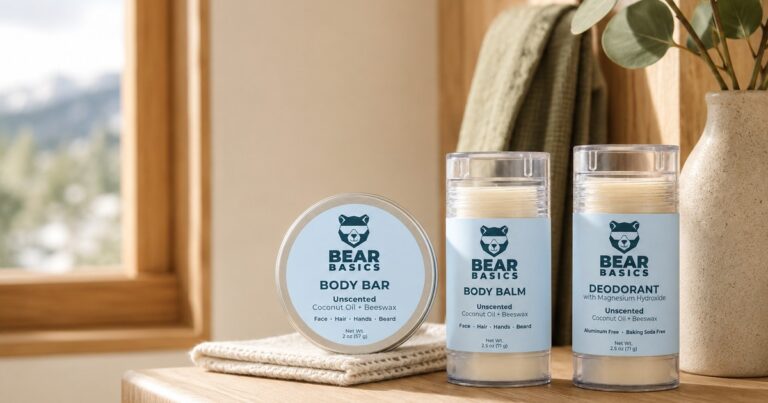
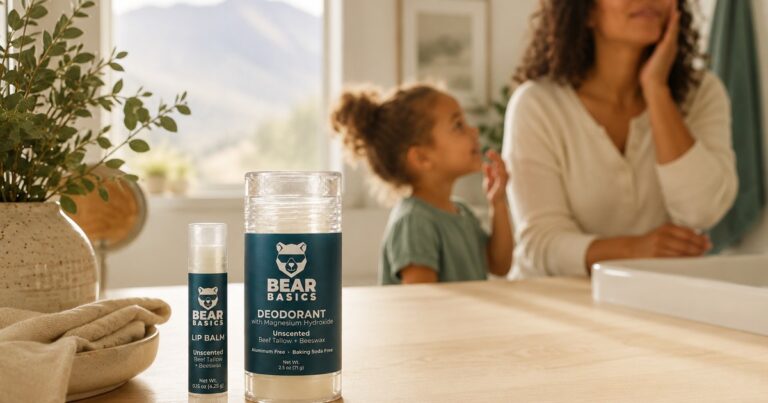
Swap one at a time as things run out, favor short, fragrance-free ingredient lists, and remember it's a preference-driven upgrade, not a panic. Start with the easy, high-impact first swaps — our deodorant and balms are simple places to begin whenever your current ones run low.
Ian founded Bear Basics on one idea: personal care built from a short list of food-grade ingredients we all recognize. Everything is small-batch and made in Colorado. Read the full story →